
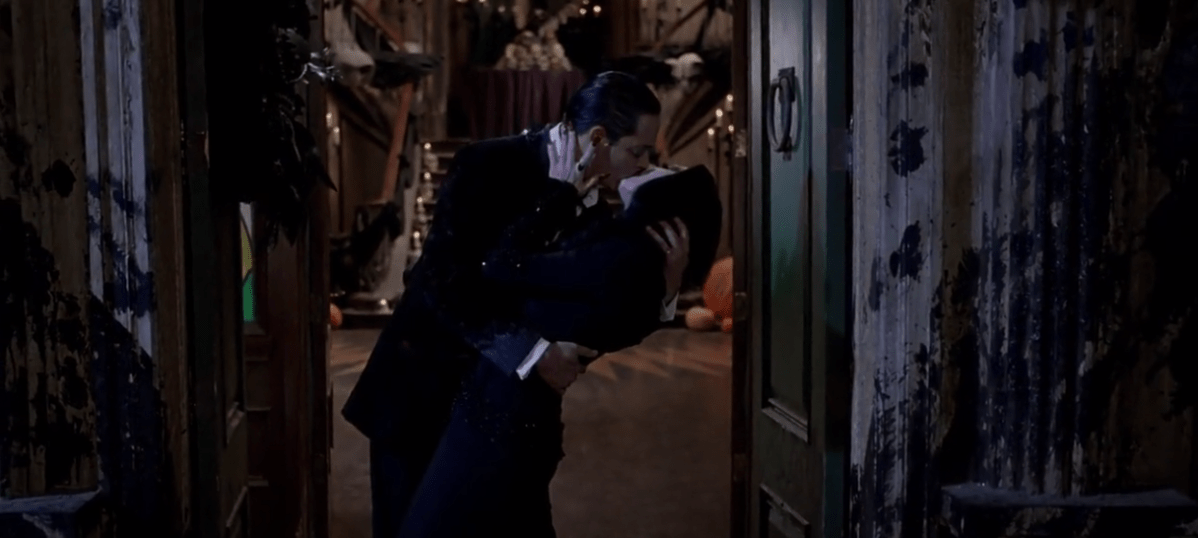
“I examined the contour of the lofty and pale forehead – (…) – the skin rivalling the purest ivory, the commanding extent and repose, the gentle prominence of the regions above the temples; and then the raven-black, the glossy, the luxuriant and naturally-curling tresses,(…)” This passage describes Morticia Addams almost to a T. We can almost imagine Gomez penning those words, in worship of his beloved. The key word being “almost”, because this passage does not describe Morticia Addams. It is not penned by Gomez. It’s not even taken from the Addams Family franchise at all. This is a passage from Edgar Allan Poe’s Ligeia, a short story published in 1838. While it is no secret that the Addams family’s universe is heavily inspired by gothic fiction, the similarities can be seen well beyond the works of Poe, especially when it comes to the depiction of love between Morticia and Gomez. Throughout the various depictions of the Addams couple, certain defining features remain and many of them echo gothic literary motifs associated with love and all its woes. But this begs the question: What literary motifs can we observe throughout Gomez and Morticia’s relationship in the Addams family franchise and what can it tells us of the shows’ gothic heritage when it comes to the depiction of love? We’ll mainly focus on the 1991 movie and needless to say, we’ll be taking a quick look at the Gothic novel and literary movement where it all started.
Physical appearance :
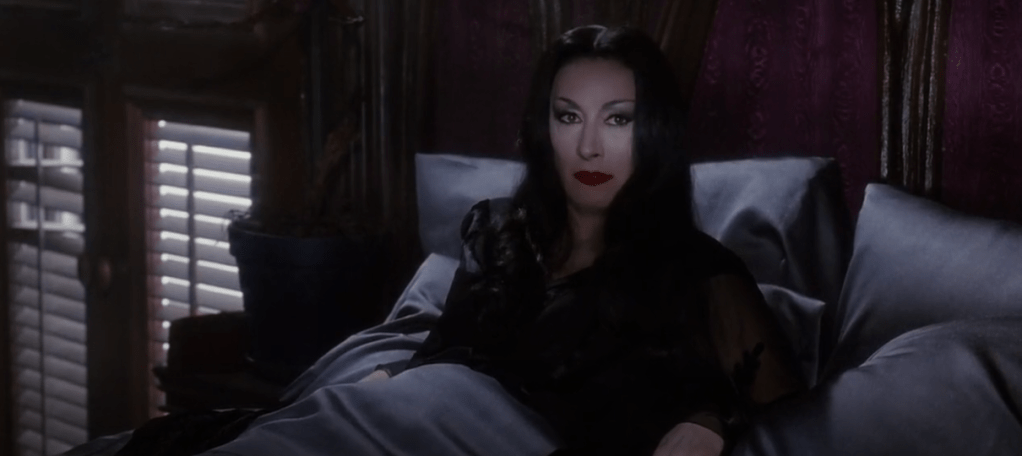
The first gothic element seen in Morticia and Gomez’s relationship can be found, as mentioned earlier, in the appearance of Morticia herself. In all of the character’s interpretations throughout the ages, she always maintains her pallor and her iconic raven-like black hair. This physical mold, when it came to feminine lovers, could be observed in E.T.A Hoffman’s The Entail with Seraphine, as its earliest introduction. This element is put forward even more in Poe’s works, considering that it was often described by love-struck narrators, as seen in the citation above taken from Ligeia. There is a lot to be said in the depiction of women in Edgar Allan Poe’s work but this short story can also show us another defining characteristic shared by both Ligeia and Morticia: strangeness. To quote the narrator of the story again, “ ‘There is no exquisite beauty,’ says Bacon, Lord Verulam, speaking truly of all the forms and genera of beauty, ‘without some strangeness in the proportion.’ ”. To many modern viewers, the Addams family’s franchise not only acknowledges Morticia’s strange beauty and sense of style but revels in it, making it an essential part of her physical characterization.
Chivalry and courtly love :
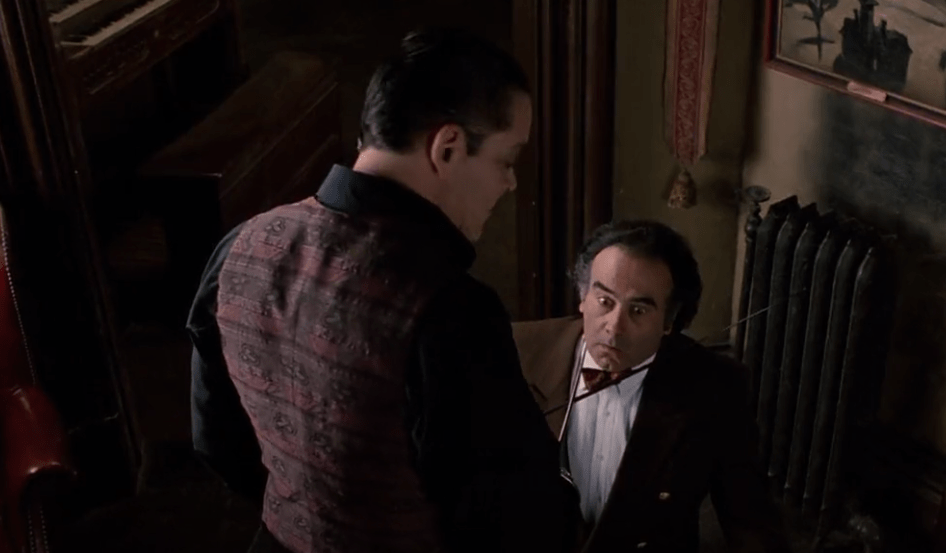
The next element is linked to the relationship dynamic between Morticia and Gomez and Gomez himself: we’re talking here about Chivalry. From the earliest work of Gothic, The Castle of Otranto by Horace Walpole, chivalry played a significant role in the depiction of love, a depiction heavily influenced by the middle ages courtly love. We can see that in the love between two characters, Theodore and Matilda, belonging to medieval times. Theodore, proclaim to the woman he loves, his wish to come to her knight and as such to kill and potentially die for her. This is a sentiment that Gomez expresses on multiple occasions but it is also a sentiment he constantly acts upon, despite the relatively contemporary time of the story. In the Addams family 1991’s film, it starts of as a comedic element, with Gomez closing the blinds with his sword because the sun irritates his beloved. In the end of the movie, however, we can see that Gomez dueled a Tully Alford to save Morticia. We can see in Gomez’s supposedly chivalrous behavior, repeated in many other movie and series in the franchise, a remnant of gothic literature in the love he shares with Morticia.
Worship and obsession :
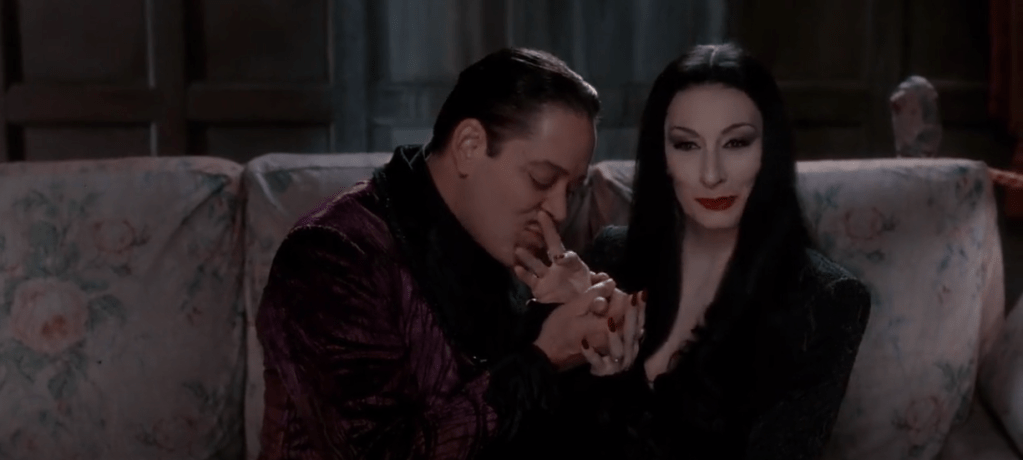
Finally, the most poignant aspect of Gomez and Morticia’s love is the obsession and the subsequent worship of the loved women. The worship and sacralization of women by the man that loves them are observed in early works of Gothic, often associated with courtly love. However, it is also an element featured heavily in Poe’s works. In Ligeia for example, the women’s beloved by the narrator is seen as holy of course but also intellectually superior. She is someone worthy of worship and constant attention. He can’t give up on her even after death and she doesn’t give up on him either, the strength of her love supposedly bringing her back to him. The constant physical affection and literal worship exchanged between Morticia and Gomez, echo that sentiment. The couple even express in the Addams family (1991) that even a day away from each other would be torture.
Conclusion:
The Addams Family franchise made fan swoon with just a glance at the lovely couple made up of Morticia and Gomez. Many enjoyed their slightly obsessive but incredibly charming and romantic behavior. However, throughout their display of affection, Morticia’s physical appearance, as well as Gomez’s chivalrous behavior, we can see that the franchise owes many of its romantic themes to gothic literature.






 golden cult