Categories
Entertainment Horror Literature Movies

Looking for the Future in the Past: How Horror revival brings forth a new age for the genre.

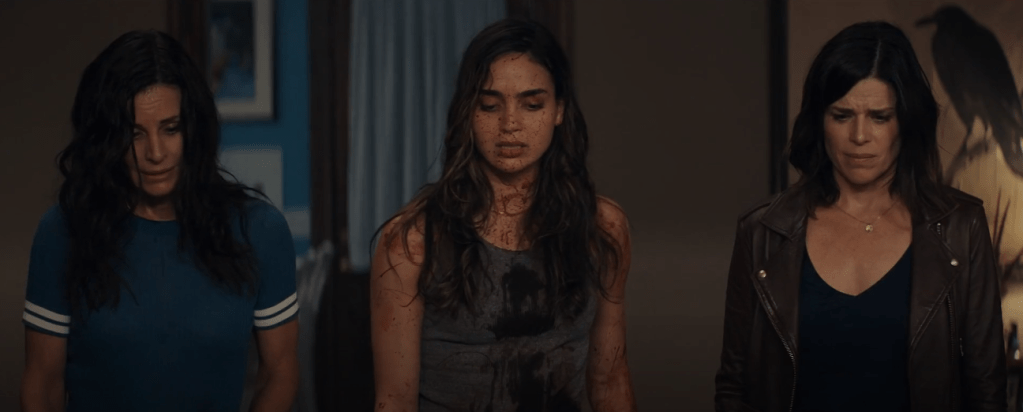
In the late 90s, if someone went to the cinema to watch a Horror movie, chances are they’d see a Slasher on the big screen, like Scream. In the late 2000s and early 2010s, chances are they’ll find themselves face-to-face with a possession Horror film like The Conjuring or Annabel. Not to say that Horror movies can be contained in one straightforward archetype per decade, or that these archetypes didn’t exist in different times. However, we can’t ignore that each cinematic era was defined by the popularity of specific tropes and narratives. This brings forth the question: what about our late 2010s and early 2020s era? What archetype emerged at the forefront of our contemporary Horror scene? According to Scream 5, a movie franchise that prides itself in its metatextuality, two trends emerge when it comes to current horror movies: the revival of classic Movies, and what is referred to as “elevated” Horror.

Indeed, many classics like Halloween and The Candy Man were remade for the big screen, so the Scream writers were definitely on to something. This desire for the revival of the old classics even goes beyond remakes and into the realm of original films. Even when producing new franchises, many of them attempt to appeal to the viewer’s nostalgia and pay homage to all the different styles and genres of Horror. The biggest example of that is in the Netflix Fear Street trilogy based on R. L. Stine’s book series of the same name. In each film, the viewer gets to experience different filming and narrative styles related to a specific era of Horror cinema. In the first film, Fear Street Part One: 1994, we revisit the Scream type of slasher, in Part Two: 1978, summer camp slashers are put into the spotlight, and finally Part Three: 1666 goes back in time and delves into the American gothic/puritan horror. During this trip back in time, the writers also attempt to add a social commentary about Homophobia, sexism, and social inequality, among other things, in the background. This is an example of how the revival of the classics overlaps with the second Horror trend mentioned in Scream 5: “Elevated” Horror.
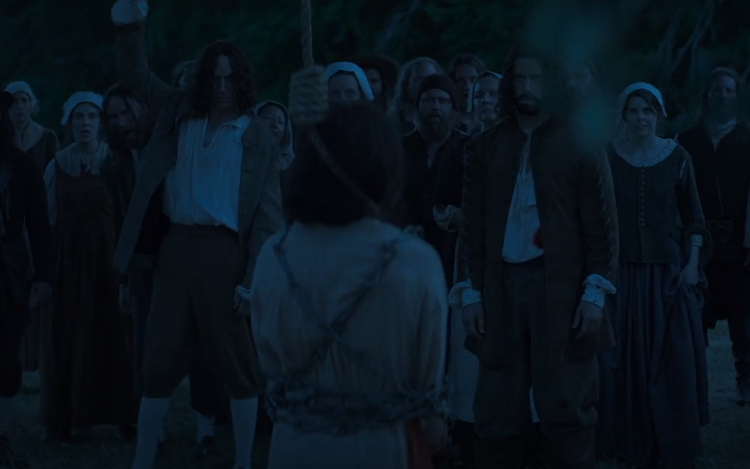
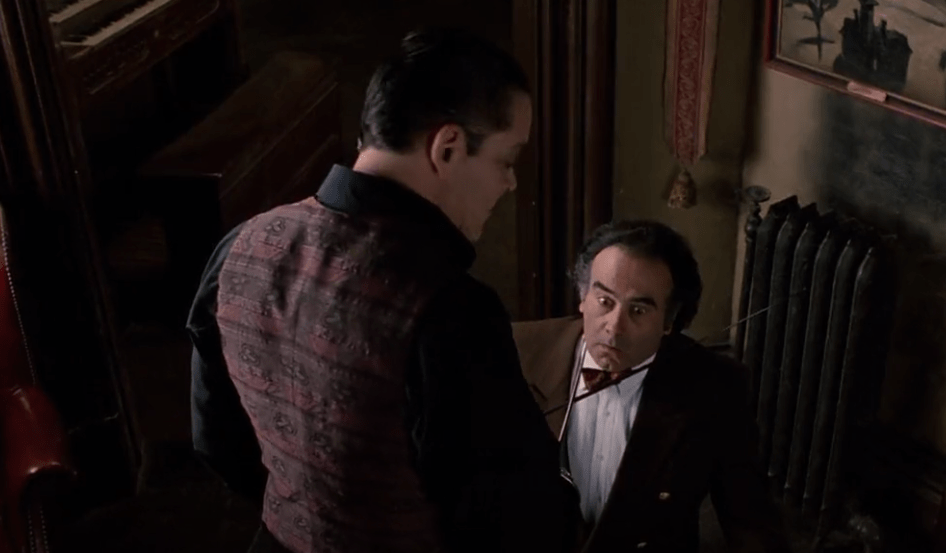
Fear Street: Part Three – 1666

While I find the term “elevated” problematic, it’s used to refer to art-house horror and social thrillers that attempt to tackle social and existentialist issues through Horror elements. Many Horror and Thriller movies produced in the past few years fit this characterization. From Get Out to Hereditary, many original movies were made to either directly, or metaphorically, represent social, psychological, and existentialist issues such as racism, generational trauma, and grief. In fact, many remakes of classical Horror movies aimed to add that social dimension to classic stories. This also extends to the adaptations – and sometimes remakes – of classic books, with The haunting anthology made by Mike Flanagan as one of the biggest examples. The famous Horror producer is even preparing an adaptation of Edgar Allan Poe’s groundbreaking short story The Fall of the House of Usher. Reusing classical Gothic stories and their different cinematic adaptations in current horror trends comes as no surprise. After all, the Gothic movement is probably the oldest predecessor of the Horror genre considering it was one of the first literary movements that had the explicit purpose of, well, horrifying its reader.  It’s only natural to re-focus on the gothic in what we spent the last few paragraphs describing as a cinematic era defined by a return to the classics. However, the grip of the past in contemporary cinematic trends goes even deeper than one might have first realized.
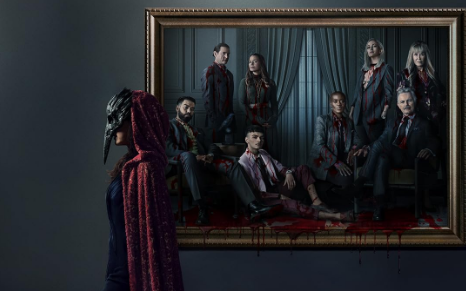
Poster: The Fall of House Usher miniseries directed by Mike Flanagan

While the Gothic genre – or any literary genre really- is one in constant evolution and expansion, it has always been about more than just fear. To many scholars, such as Maurice Levy, the gothic story was also defined by the pursuit of personal and generational quests. These quests often tackled generational conflicts and Madness like in The Castle of Otranto, the first gothic novel. They involved people being haunted by grief and trauma that showed itself through supernatural occurrences like in The Entail by E.T.A Hoffman. Sounds familiar?  Even in terms of the much younger American gothic, classic stories like Hawthorne’s The House of the Seven Gables have always used the horrifying to tackle Puritanism and the sins of the American past. All themes we see again in The Witch, one of the movies that ushered in the era of “Elevated” Horror according to an article in Vanity Fair. And here lies the problem with the use of the term “Elevated” Horror. You can’t consider horror with meaningful narratives an elevated version of the genre when the genre was always more than just spooks. The term did however help to bring this dimension of Horror back to the forefront of viewer’s minds, as the previously mentioned article point out. While the symbolic and meaningful dimension of Horror was always here, we can’t deny that it was dismissed and forgotten for a long time. This current desire to bring back attention to it and to use Horror to reflect various issues is, in itself, a revival. The revival of an older definition of scary stories. And so we see in contemporary horror the return of classical stories, but also the return of a long-lost definition of the genre. However, even this desire to go back to the past is, paradoxically, a desire of the past.

Another important feature of the Gothic that went beyond the literary movement and into the world of cinema is an accent on the past.  It’s no coincidence that the stories always took place in old, often medieval buildings. Or that the story itself is one that started in a time of old. The denomination of “Gothic” in and itself is one used to talk about medieval architecture and then the literary movement by association. This return to gone-by history played major roles in many gothic tales. In The Castle of Otranto, for example, the author, Horace Walpole, mentions in the first preface that the superstitious beliefs exhibited in the story are justified by the time when it happened. A medieval time with strange beliefs and notions. However, that return to the past and its traditions – no matter what era that past existed in – is also the expression of something else entirely. In early Gothic stories, the architectural structure, often the literal materialization of the past, ends up in ruins as part of the resolution. With that being said, we were often left with the hope of something being rebuilt from it. A better version of the castle like in The Castle of Otranto, a lighthouse to guide sailors like in The Entail… We go back to the past, appreciate what it can give us, and build something new from it. Something that belongs in a new era.
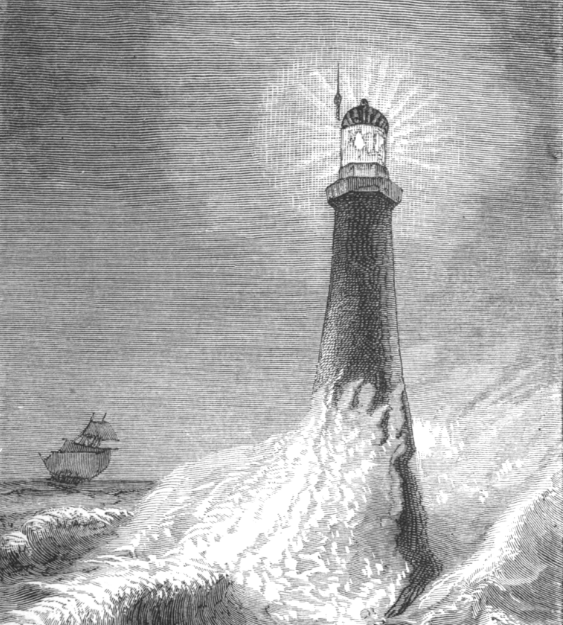
 All the storytellers that came before left something for those that came after them to use in ways they couldn’t even have imagined.  The storytellers and cinematographers of previous times didn’t have the cinematographic techniques we have in our contemporary era, the understanding we have of certain social issues, and the representation of various social groups we have now. They didn’t have certain creative geniuses we have now, the Horizon of expectations we have now. As such it would not only be unfair, but also wrong, to classify today’s Horror as simple copies and remakes. The movies mentioned previously as “Elevated” might take inspiration from the past but like those in that same past, they use it to make something new, to rebuild their own lighthouse that will guide the way to the future…
Categories
Cartoon Entertainment Horror Literature Movies

The Addams Family and Gothic love : A literary heritage.

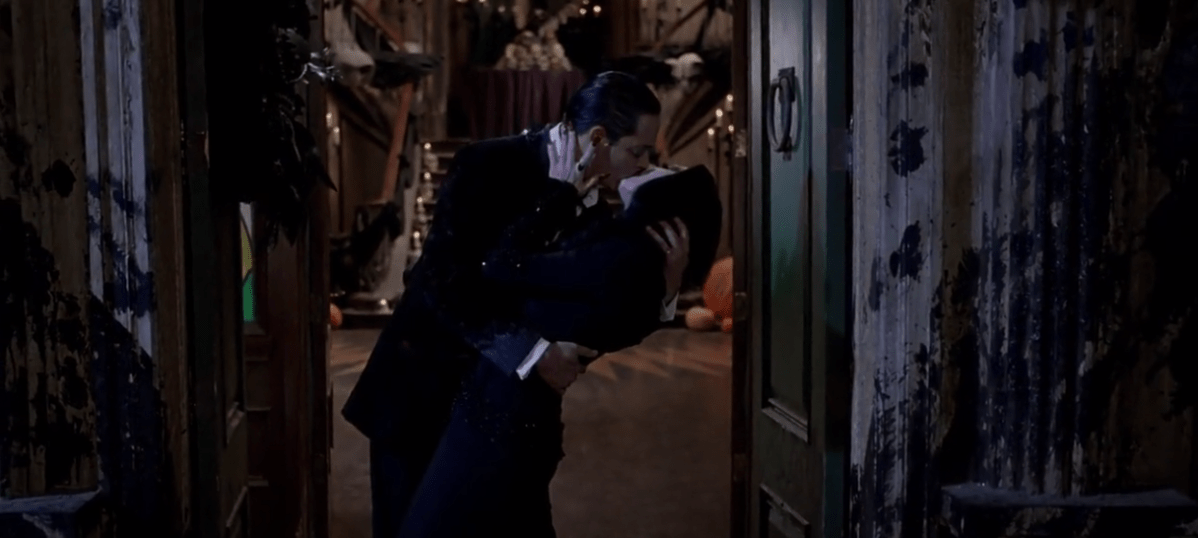
“I examined the contour of the lofty and pale forehead – (…) – the skin rivalling the purest ivory, the commanding extent and repose, the gentle prominence of the regions above the temples; and then the raven-black, the glossy, the luxuriant and naturally-curling tresses,(…)” This passage describes Morticia Addams almost to a T. We can almost imagine Gomez penning those words, in worship of his beloved. The key word being “almost”, because this passage does not describe Morticia Addams. It is not penned by Gomez. It’s not even taken from the Addams Family franchise at all. This is a passage from Edgar Allan Poe’s Ligeia, a short story published in 1838. While it is no secret that the Addams family’s universe is heavily inspired by gothic fiction, the similarities can be seen well beyond the works of Poe, especially when it comes to the depiction of love between Morticia and Gomez. Throughout the various depictions of the Addams couple, certain defining features remain and many of them echo gothic literary motifs associated with love and all its woes. But this begs the question: What literary motifs can we observe throughout Gomez and Morticia’s relationship in the Addams family franchise and what can it tells us of the shows’ gothic heritage when it comes to the depiction of love? We’ll mainly focus on the 1991 movie and needless to say, we’ll be taking a quick look at the Gothic novel and literary movement where it all started.

Physical appearance : 

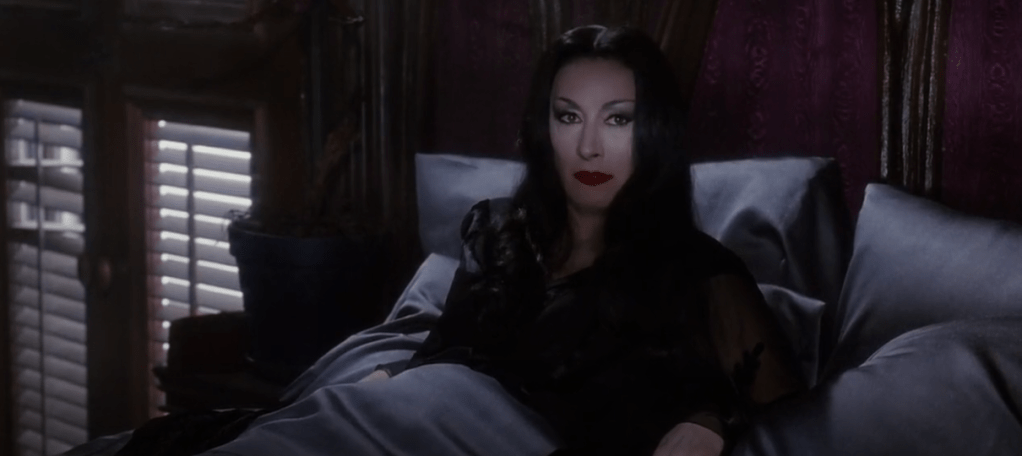
The first gothic element seen in Morticia and Gomez’s relationship can be found, as mentioned earlier, in the appearance of Morticia herself. In all of the character’s interpretations throughout the ages, she always maintains her pallor and her iconic raven-like black hair. This physical mold, when it came to feminine lovers, could be observed in E.T.A Hoffman’s The Entail with Seraphine, as its earliest introduction. This element is put forward even more in Poe’s works, considering that it was often described by love-struck narrators, as seen in the citation above taken from Ligeia. There is a lot to be said in the depiction of women in Edgar Allan Poe’s work but this short story can also show us another defining characteristic shared by both Ligeia and Morticia: strangeness. To quote the narrator of the story again, “ ‘There is no exquisite beauty,’ says Bacon, Lord Verulam, speaking truly of all the forms and genera of beauty, ‘without some strangeness in the proportion.’ ”. To many modern viewers, the Addams family’s franchise not only acknowledges Morticia’s strange beauty and sense of style but revels in it, making it an essential part of her physical characterization.

Chivalry and courtly love  : 

The next element is linked to the relationship dynamic between Morticia and Gomez and Gomez himself: we’re talking here about Chivalry. From the earliest work of Gothic, The Castle of Otranto by Horace Walpole, chivalry played a significant role in the depiction of love, a depiction heavily influenced by the middle ages courtly love. We can see that in the love between two characters, Theodore and Matilda, belonging to medieval times. Theodore, proclaim to the woman he loves, his wish to come to her knight and as such to kill and potentially die for her. This is a sentiment that Gomez expresses on multiple occasions but it is also a sentiment he constantly acts upon, despite the relatively contemporary time of the story. In the Addams family 1991’s film, it starts of as a comedic element, with Gomez closing the blinds with his sword because the sun irritates his beloved. In the end of the movie, however, we can see that Gomez dueled a Tully Alford to save Morticia. We can see in Gomez’s supposedly chivalrous behavior, repeated in many other movie and series in the franchise, a remnant of gothic literature in the love he shares with Morticia.

Worship and obsession : 

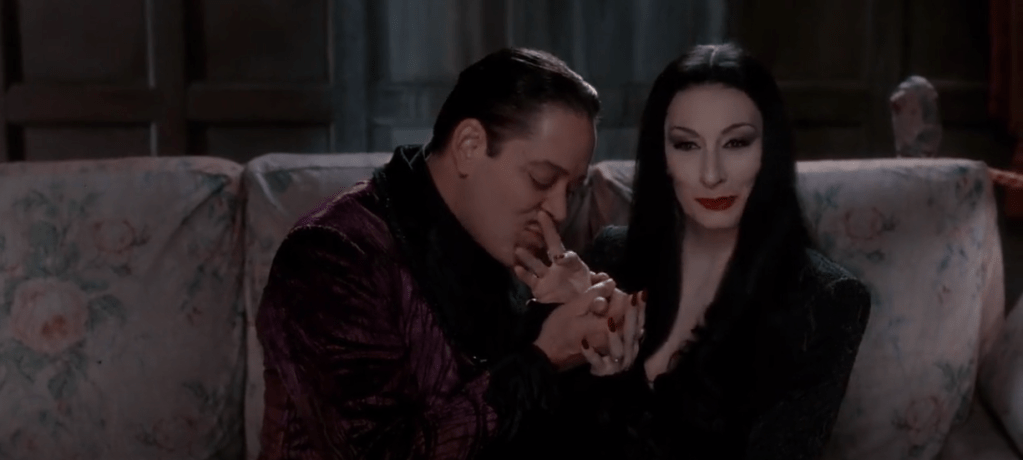
Finally, the most poignant aspect of Gomez and Morticia’s love is the obsession and the subsequent worship of the loved women. The worship and sacralization of women by the man that loves them are observed in early works of Gothic, often associated with courtly love. However, it is also an element featured heavily in Poe’s works. In Ligeia for example, the women’s beloved by the narrator is seen as holy of course but also intellectually superior. She is someone worthy of worship and constant attention. He can’t give up on her even after death and she doesn’t give up on him either, the strength of her love supposedly bringing her back to him. The constant physical affection and literal worship exchanged between Morticia and Gomez, echo that sentiment. The couple even express in the Addams family (1991) that even a day away from each other would be torture.

Conclusion:

The Addams Family franchise made fan swoon with just a glance at the lovely couple made up of Morticia and Gomez. Many enjoyed their slightly obsessive but incredibly charming and romantic behavior. However, throughout their display of affection, Morticia’s physical appearance, as well as Gomez’s chivalrous behavior, we can see that the franchise owes many of its romantic themes to gothic literature.

Categories
Entertainment Horror Movies

Scream (2022) and its’ Meta cinematic legacy: Most memorable moments.

Meta cinema or Meta as we commonly call, it is an approach to movie making that is aware of its fictionality.  It blurs the limits between the viewer’s reality and the character’s reality, letting moviemakers indulge in some ironically self-aware humor to divert criticism or to incorporate some commentary on the movie word itself. Either way, it can lead to a very enjoyable viewing experience. The scream franchise, credited for bringing back slashers into the horror game, is a fan beloved because of its mix of horror and humor but also due to its Meta cinematic dimension. It stood out for its self-awareness which often makes known horror tropes the butt of the jokes while simultaneously mirroring the horror trends of its time. To quote what Randy’s niece said on the stab movies, they’re Meta slashers whodunit. Now, with the introduction of Scream (2022) and Scream 6 (VI) now out in theatre, the franchise is officially back with its murderous shenanigans. The first new arrival in this revival of the franchise is the first movie not directed by Wes Craven who died in 2015. It is the product of radio silence, a group of moviemakers consisting of Matt Bettinelli-Olpin, Tyler Gillett, and Chad Villella who or behind some of the best horror movies released in the later years, such as ready or not. This installation of the scream franchise follows Sam Carpenter, a young girl who returns to Woodsboro after her sister gets attacked by Ghostface. It introduced new interesting characters while bringing back some of the beloved originals like Sid Prescott, gale weather, and Dewey Riley. However, how well does the new Scream (2022) live up to the franchise’s meta-cinematic legacy? we’ll be looking at some of the most telling meta-cinematic moments in Scream (2022), or let’s be honest, Scream 5.

Needless to say, we’ll be delving into spoiler territory from this point forward. If you haven’t watched the movie, go ahead and do that before coming back to this article.

The opening scene: “It always started with a kill scene.”

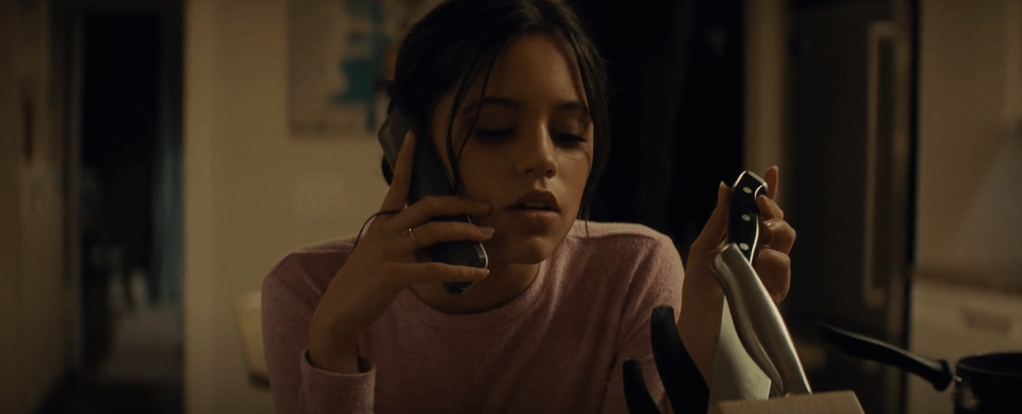
First and foremost, the opening scene is some of the most important moments in a scream movie, it can make or break it. With Tara played by Jenna Ortega, who also starred in Netflix’s Wednesday, as the first victim, this scene is particularly meta-cinematic, of course, due to the mention of the stab franchise that mirrors the scream franchise. After all, Tara said it: It always started with a kill scene. It’s meta-cinematic in the way it mirrors all the other opening scenes of the scream franchise with familiar dialogues or even familiar frames where Tara talks to the killer on the phone while playing with a kitchen knife. It also mirrors a certain opposition growing in the contemporary horror scene: the supposed feud between slashers movie and “Elevated Horror” that uses Horror as a vessel or allegory for different social and philosophical takes. Tara is a person who prefers the latter, mentioning various movies such as hereditary or it follows, even almost getting killed for her lack of knowledge about slashers and her preference for the Babadook. What makes this even more Meta, is that a lot of contemporary viewers might see themselves In Tara, which was the case for me honestly, and that adds a whole other layer to that opening scene.

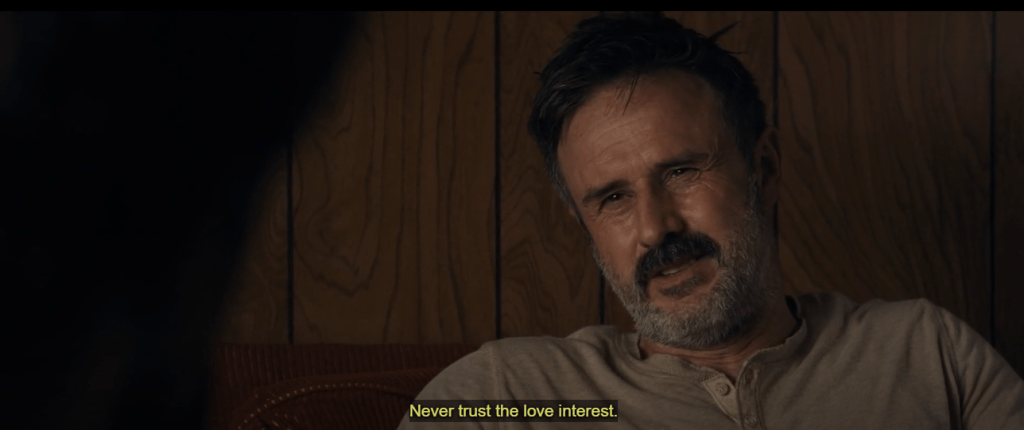
Dewey’s return:  “Never trust the love interest.”

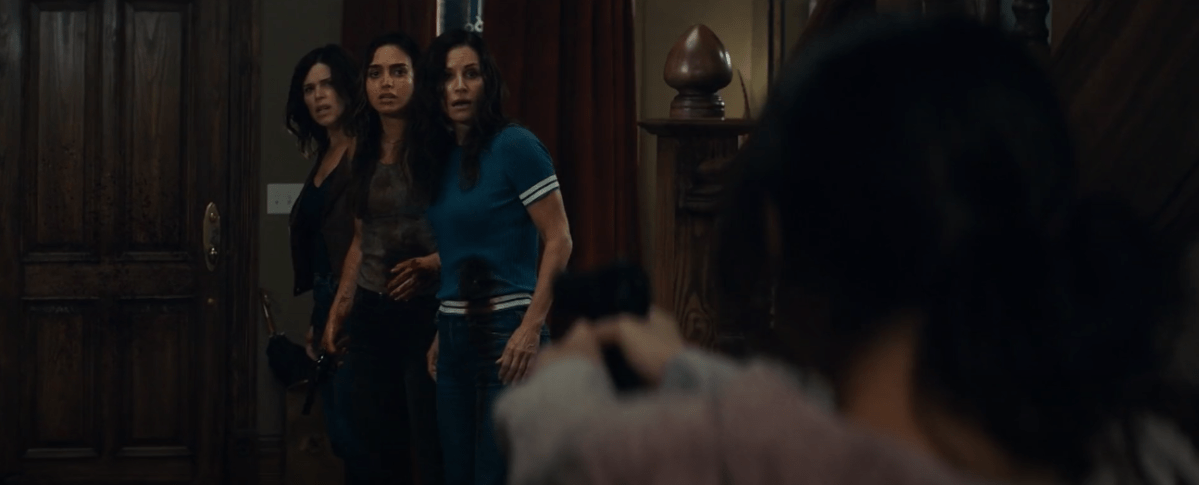
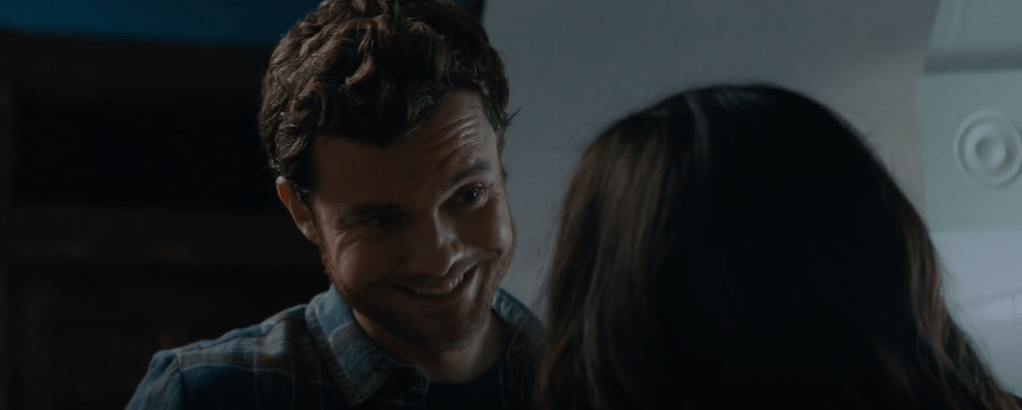
Dewey literally starts his conversation with Sam played by Melissa Barrera, by questioning her about her boyfriend and listing off the rules to surviving a stab movie, which of course applies to their situation considering the blurred if not non-existent limit between the stab movie and the characters’ reality: the scream movie. Which I find Meta as hell. This listing of the rules to survive a horror movie is a classic throughout the scream franchise, first with Randy Meeks throughout the initial trilogy, here with Dewey, and later on with Mindy, Randy’s niece. This approach to horror movies is a great way to show the movie maker are self-aware of the common tropes they are using and it plays on the humor of the characters falling for these exact tropes despite their knowledge of the rules. Both a criticism of itself and a comedy skit. Although, one thing stands out in Dewey’s speech considering how on the nose it is: “Never trust the love interest.”  According to him, despite how sweet and caring they seem, they’ll try to rip your head off in Act tree. Lo and behold, Richie, played by Jack Quaid, did exactly that.

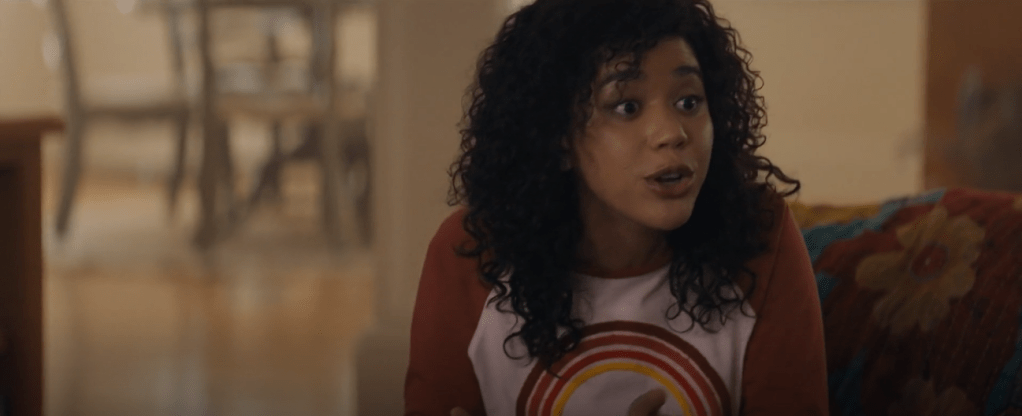
Mindy’s expertise: “Oh my god he’s making a requel!”

Mindy, played by Jasmin Savoy Brown, certainly lives up to her uncle’s legacy in this scene. Not only does she describe perfectly the trends of “Requel” currently happening in the horror genre, citing a list of contemporary movies that fit the trend. She nails the killer’s motive while also reflecting on fans’ and movie makers’ fear alike when creating the Scream (2022). She also funnily enough shows some transparency between the production of the movie and the action of said movies by saying how the purpose was to introduce new characters while also bringing back the originals. She also mirrors the movie makers’ concern when it comes to making a new Scream move that pleases everyone. If that’s not Meta I don’t know what is.  She also says something important about the discourse between elevated horror and slasher movies when Amber mentions that there’s nothing wrong with elevated horror: “ Obviously, but that’s not stab”.   

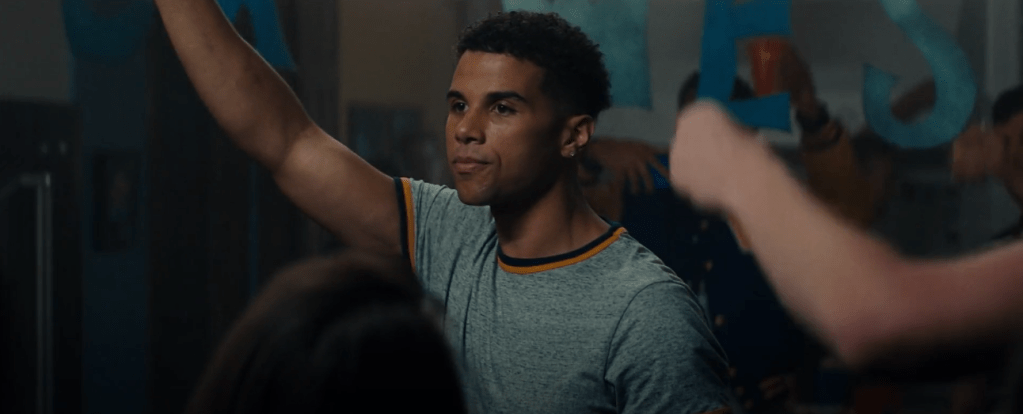
The party scene: “For Wes!”

While not necessarily the most loaded, this scene is arguably one of my favorite meta-cinematic moments in that movie and I just had to mention it. In the movie, they are paying tribute to Wes, the character who died earlier in the movie with his mom sheriff judy hicks who is a returning character in the franchise, despite how cautious they were. This party is supposed to be a memorial, a celebration of life and chad does exactly that by taking a shot and cheering in his honor. However, this character isn’t the only Wes being celebrated. In fact, this scene was the movie maker’s way to honor Wes Craven, the director of all previous scream movies, a subtle nod to someone who changed the horror landscape for years to come. This is reinforced by the fact the current filmmakers, radio silence, dedicate this movie to him as is shown in the credit scene.

Mindy’s couch scene: “ No, Randy, look behind you.

One of the funniest meta-cinematic moments of both this movie and the original scream. We have a character telling another character in the movie they are watching to turn around. Ironically that’s what they should be doing too because Ghostface is behind them. We see Mindy watching randy in the same situation she’s in. Mindy, in a surprising show of self-awareness, does turn around, unlike her uncle, which gives her enough time to be saved by Sam. All around a hilarious tribute to the original. Without of course forgetting the exchange between Mindy and Richi when the latter was going to get some beer from the basement. He even says that he’ll be right back and they share a conspirator laugh over what Randy said one shouldn’t say a few minutes earlier in the stab movie Mindy was watching.

The killers’ speech: “How can fandom be toxic?”

Mindy’s guess of the killers’ motive was spot on: they are fan displeased with the sequel who wants to give Hollywood new material. This mirror the movie industry and toxic fandom culture. They even mention a meeting on Reddit, If that isn’t a mirror of real life I don’t know what is. While it can be funny, this is also a big commentary on the landscape of horror movie fandoms and it mirrors the struggle of movie makers. The killers are also aware of the way they and subsequently Scream (2022) follow the classic scream structure as Amber says: “Third act bloodbath, check. Killers revealed, check! Time for the big finale!”.

Amber’s Finale: “Time to pass the torch.”

Finally, while this scene might not be as full of meta-cinematic content as the others, Amber, played by Mikey Madison, expresses that the old characters’ story is over and that it’s time to pass the torch. This actually mirrors the stage at which this movie stands in the scream franchise. It’s somehow a transitory stage between the old characters and the new characters, between Sam and Sid, the old friend group, and the new friend group. This can be seen by the fact that the new upcoming movie Scream 6 features mostly the new characters for the expectation of Gale weather and Kirby reed. So in a sense, it was indeed the time to pass the torch.

Many other meta-cinematic moments were present in the movie but to keep it brief we limited this article to the most major ones. As such don’t hesitate to tell us what we missed in the comments! But, in conclusion, we can say that Scream (2022) definitely lives up to its predecessor meta cinematic Ambitions, all while adapting it to a new contemporary audience through classic humor, honorable mentions, and well-placed commentaries on the horror genre and its fans. However, will we be able to say the same thing about scream 6 (VI)?

Design a site like this with WordPress.com
Get started