“She-Ra And The Princesses Of Power” is the kind of show that stays with the viewer, one that they come back to, and one that they can watch a million times and still notice new things every time. From the great representation to the interesting storyline, it’s clear that Noelle Stevenson and the crew behind the making of the reboot had put a lot of care and work into every detail that make up the show. There are many aspects worth talking about, such as world-building, character development, and more. This article focus on the language of the first one used throughout « She-Ra and the princesses of power » as this often-overlooked element plays a bigger role in the show than one would think.
With the lack of information given by the studio about the language of the first ones, a general analysis of the show is important in this case, so beware of spoilers.
A month before the release of the show on Netflix, The official Twitter account released a guide on how to read the first ones’ language, likely as a marketing scheme, and it’s the only piece of information given about the language of the first ones’. According to the official guide, The language in question uses a phonetic alphabet that associates shapes with sounds and that it roughly translates to English. So whether it’s a new language or just a different alphabet to write English in, is up for debate. As such, the focus will be put on the alphabet itself.
The Alphabet of the first one and what can be taken from it:
At first glance, this alphabet is full of geometrical shapes, sharp edges, and straight lines, similar to runes, Phoenician alphabet, and other old languages. This link help mystify the first one’s through their language giving the viewer the impression that they are looking at the language of a lost civilization. However, it also differs from the usual old or modern languages, in the fact that the letters aren’t tied in a linear shape, with the world themselves often forming a structure of their own giving room for a writer’s individuality and an outlet for them to express their identity. This gives an air of novelty to the alphabet of the first one’s which is how the viewer ends up looking at writings familiar enough for them to recognize it as the old language of a lost civilization but still unique enough to awaken their curiosity.
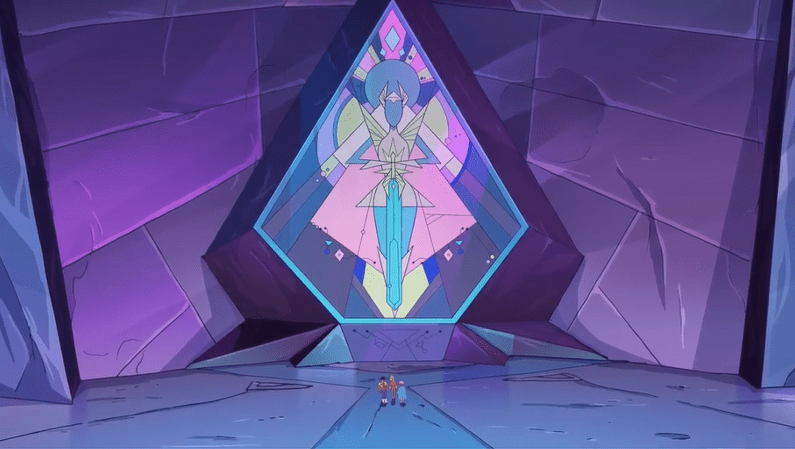
Another interesting thing to note is the way the words are connected. Tied together through lines, they end up spreading the transcript all over the surface that serves as a support to the alphabet. They look similar to a motherboard’s circuit. In the show, it appears that this language’s utility doesn’t lie in its understanding or vocalization, as most of the viewers don’t know how to read the alphabet of the first one, and it’s not spoken or used in the characters daily life, but it lies more in its visual presence.
Its appearance in the show and what it means:
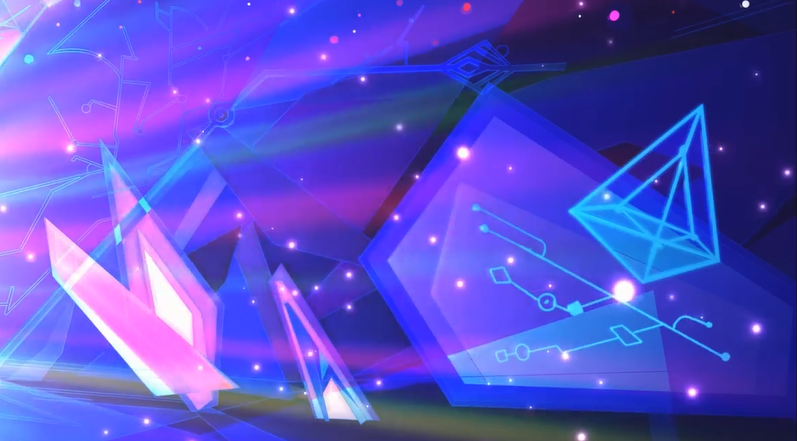
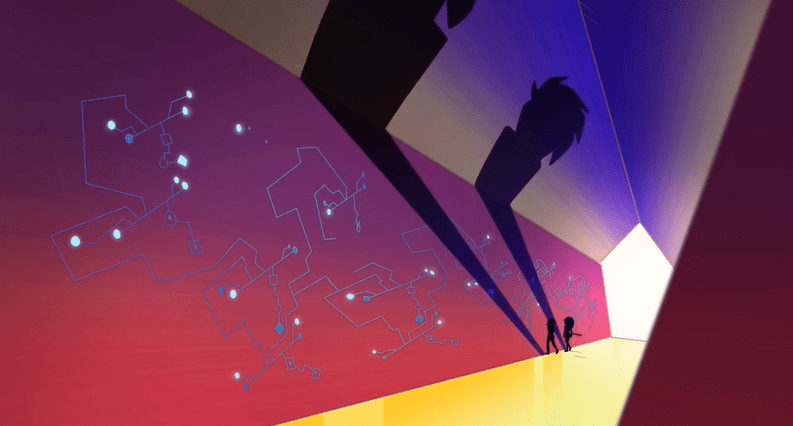
In She-Ra And The Princesses Of Power, the language of The first ones first appears when Adora touches the sword and meets Light Hope in the first episode, The sword part 1, already drawing a connection between the first’s one’s civilization and these symbols the viewer has yet to understand. They will end up showing a lot throughout the series in both the first one’s tech and buildings, emphasizing the constant and looming presence of the first ones in the show. We also see the way they light up whenever any first one’s tech is used, or how they change color when infected. The first one’s alphabet doesn’t limit itself to objects however, it can also be seen on multiple occasions spread overs characters’ bodies, similar to tattoos.
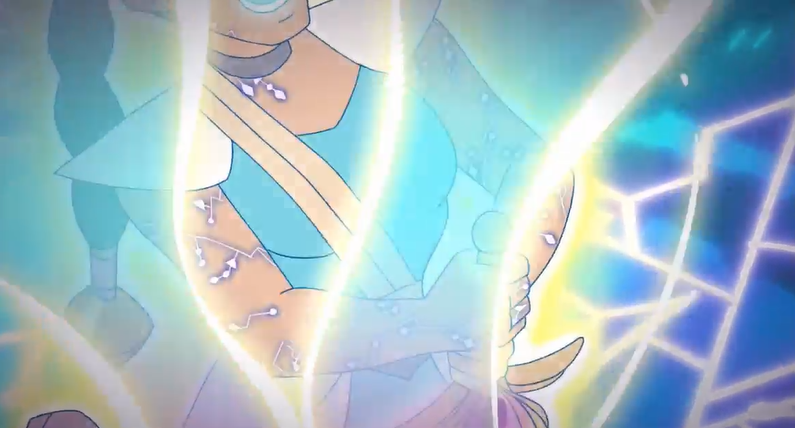
In season 4 episode 9 hero, it appears on a living breathing person, when the viewer learns about the heart of Etheria project, it appears on Mara’s skin when the weapon is activated and for the first time, it appears on She-Ra’s sword. They even appear on the planet itself. This phenomenon happens again in episode destiny 2. The language of the first ones appears on the princesses and their runestones as well as Adora herself. It’s an insight into the way the first one’s language was used during Adoras’ time, as they don’t only look like a motherboard’s circuit as mentioned before, but also act like one, connecting the multiple parts of a bigger machine, siphoning the energy of each and transferring them where they need to be, here being She-Ra’s sword. But they also act as restraints, shackling down Etheria’s magic and everyone else involved in the first one’s machinations. This reinforces the first one’s tie to technology and the artificial, and the way they saw Etheria, the princesses, and most importantly She-Ra as nothing more than a part of their machine with no choice in the matter.
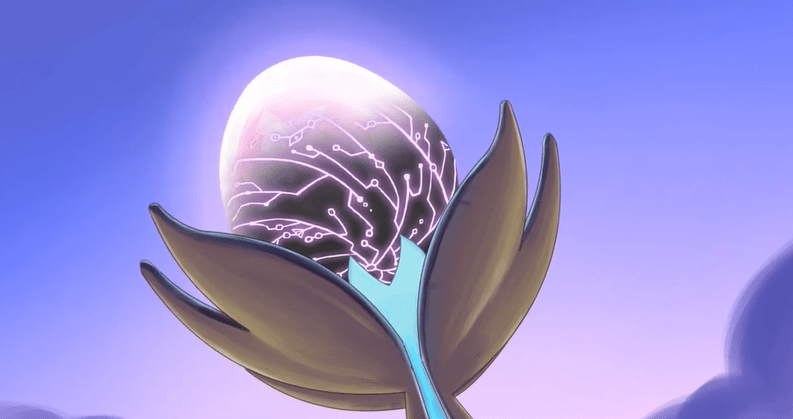
However, Adora does things differently. She breaks the sword, with it the first one’s grip on her and the letters disappear from the rune stones. The next time the sword is shown, is in save the cat When Adora transforms into her new version of She-Ra. The new sword that materialized, doesn’t have any first one’s engraving, and along with all the changes in the new She-Ra, is a testament to Adora’s identity, and to the fact that this She-Ra is the embodiment of the person that she is, free from the first one’s hold. Even though it reappears in season 5 on the planet itself, it doesn’t appear on Adora again until the episode fails safe, where the fail-safe in question materializes as First one’s writing. This time, however, the writing appears different, it’s not impersonal lines engraved on someone’s skin to activate the heart but on the contrary, to deactivate it. It’s engrained in Adora’s soul, as mentioned in the episode failsafe, it’s personal, and it’s the first time in the show where the writing is somehow personalized, forming the same world it translates to, a heart.
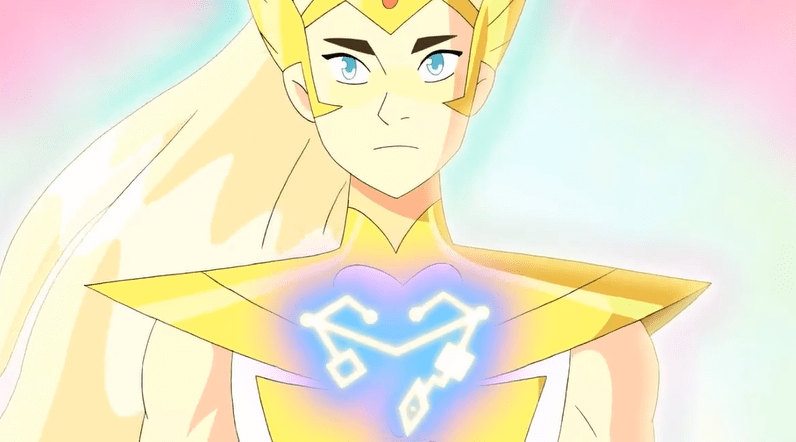
The first one’s language in the show doesn’t just help immerse the viewer in the story or connect the narrative dots, but its appearances and evolution is also an outlet for both the story’s progress and the character’s growth, showing how the authentic nature of things triumph over outside influences.
 golden cult