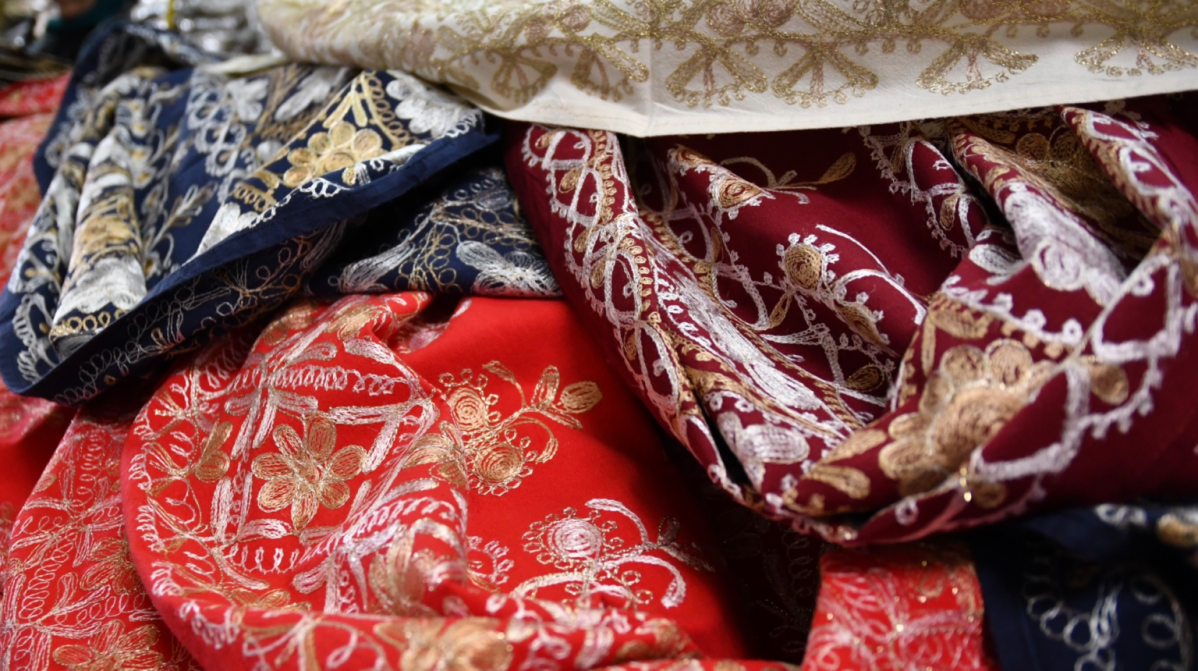
Bringing Syrian culture to the world of fashion one thread at a time, Al Aghabani can be found on Etsy and Instagram, selling intricate and colorful embroidered pieces of clothing and accessories. Named after a traditional Syrian embroidery technique passed down from mother to daughter, they were able to transfer this art typically used for silk tablecloths onto various items, one of the most original being masks. Behind this innovative idea, can be found Tasneem Naffakh, a young Syrian woman currently living in the United States of America. She initially learned the craft through books and her mother’s guidance, and today works toward introducing this interesting part of her culture to the world. To know more about the thought process and the work that went toward making this Etsy shop a reality, there is only one person to ask, and that is Tasneem Naffakh herself.
Q: How did you start working with embroidery, considering that it’s a traditional craft practiced only by a selected few?
A: So for the pieces, I am selling right now, I am not the one who embroiders them although I do embroider – Syrian women do! Aghabani, or the type of embroidery featured on my pieces, is a handicraft only made in Syria. It is made by a woman on the outskirts of Damascus, particularly in the region of Douma. Once a woman in Syria from Douma is married she gets gifted a sewing machine and makes her living by guiding the machine to make intricate and beautiful designs. The designs are often inspired by the Syrian landscape – trees, flowers, etc.
I decided to work with Aghabani pieces because I was looking for textiles that were traditional to Syria. I initially did this research to seek out the textiles because I’ve always wanted to get into fashion and I wanted to bring in my culture and heritage to the brand I was building.
Aghabani and the embroidery done on the high-quality cotton is typically marketed and sold as tablecloths – but no one is buying tablecloths anymore. That’s when the idea came to me that I could transform the artwork into wearable clothing!
Q: Where do you get your inspiration for your various pieces of clothing and accessories?
A: I get my inspiration for my pieces and their style by looking at traditional Syrian folk wear. I go for styles that are more simple so they can properly showcase the embroidery!
Q: What pushed you to add this traditional art to the modern industry of mask making?
A: I started to make masks with the Aghabani because I realized everyone could own Syrian women’s art! Everyone was wearing a mask and many were looking to celebrate cultural heritage and people through it!
Q: What is one project, you dream of making with your embroidery skills?
A: Although I’m just selling what I sew now, I’d love to sell works I embroider with traditional cross stitch or tatreez. I want to tell stories with my work and infuse meaning. I would also like to come out with a full collection sometime soon that also utilizes Syrian brocade and silk!
Q: what do you eventually wish to achieve with your work?
A: With my work, in the end, I want to help revive and revitalize the Syrian textile industry. I want the artwork to live on and I want the Syrian people to have the chance to rebuild.
 golden cult