Categories
Entertainment Horror Literature Movies

Looking for the Future in the Past: How Horror revival brings forth a new age for the genre.

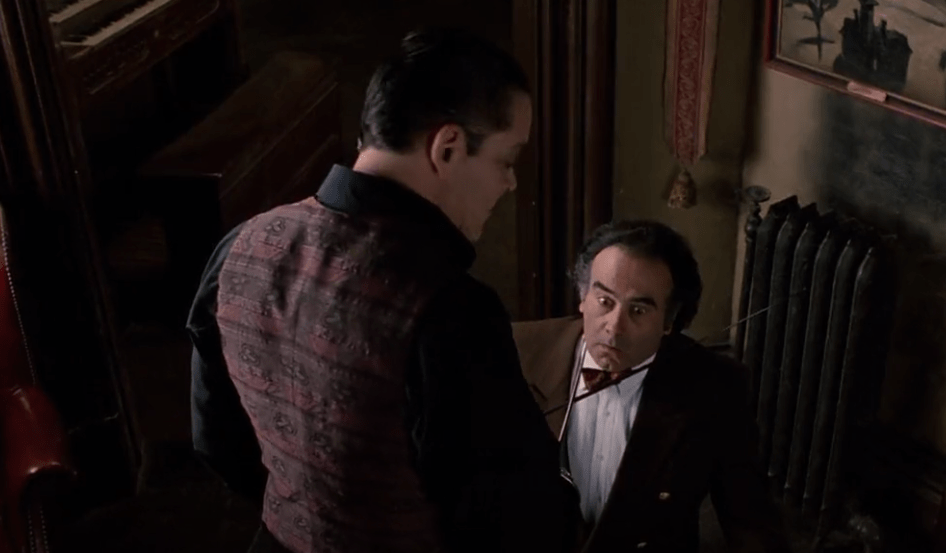
In the late 90s, if someone went to the cinema to watch a Horror movie, chances are they’d see a Slasher on the big screen, like Scream. In the late 2000s and early 2010s, chances are they’ll find themselves face-to-face with a possession Horror film like The Conjuring or Annabel. Not to say that Horror movies can be contained in one straightforward archetype per decade, or that these archetypes didn’t exist in different times. However, we can’t ignore that each cinematic era was defined by the popularity of specific tropes and narratives. This brings forth the question: what about our late 2010s and early 2020s era? What archetype emerged at the forefront of our contemporary Horror scene? According to Scream 5, a movie franchise that prides itself in its metatextuality, two trends emerge when it comes to current horror movies: the revival of classic Movies, and what is referred to as “elevated” Horror.

Indeed, many classics like Halloween and The Candy Man were remade for the big screen, so the Scream writers were definitely on to something. This desire for the revival of the old classics even goes beyond remakes and into the realm of original films. Even when producing new franchises, many of them attempt to appeal to the viewer’s nostalgia and pay homage to all the different styles and genres of Horror. The biggest example of that is in the Netflix Fear Street trilogy based on R. L. Stine’s book series of the same name. In each film, the viewer gets to experience different filming and narrative styles related to a specific era of Horror cinema. In the first film, Fear Street Part One: 1994, we revisit the Scream type of slasher, in Part Two: 1978, summer camp slashers are put into the spotlight, and finally Part Three: 1666 goes back in time and delves into the American gothic/puritan horror. During this trip back in time, the writers also attempt to add a social commentary about Homophobia, sexism, and social inequality, among other things, in the background. This is an example of how the revival of the classics overlaps with the second Horror trend mentioned in Scream 5: “Elevated” Horror.
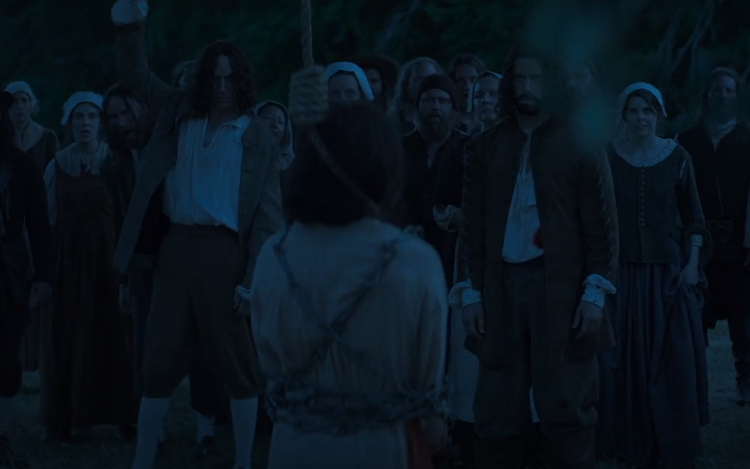
Fear Street: Part Three – 1666

While I find the term “elevated” problematic, it’s used to refer to art-house horror and social thrillers that attempt to tackle social and existentialist issues through Horror elements. Many Horror and Thriller movies produced in the past few years fit this characterization. From Get Out to Hereditary, many original movies were made to either directly, or metaphorically, represent social, psychological, and existentialist issues such as racism, generational trauma, and grief. In fact, many remakes of classical Horror movies aimed to add that social dimension to classic stories. This also extends to the adaptations – and sometimes remakes – of classic books, with The haunting anthology made by Mike Flanagan as one of the biggest examples. The famous Horror producer is even preparing an adaptation of Edgar Allan Poe’s groundbreaking short story The Fall of the House of Usher. Reusing classical Gothic stories and their different cinematic adaptations in current horror trends comes as no surprise. After all, the Gothic movement is probably the oldest predecessor of the Horror genre considering it was one of the first literary movements that had the explicit purpose of, well, horrifying its reader.  It’s only natural to re-focus on the gothic in what we spent the last few paragraphs describing as a cinematic era defined by a return to the classics. However, the grip of the past in contemporary cinematic trends goes even deeper than one might have first realized.
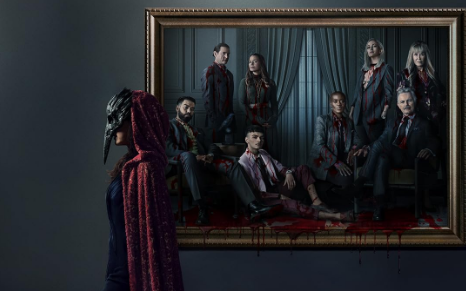
Poster: The Fall of House Usher miniseries directed by Mike Flanagan

While the Gothic genre – or any literary genre really- is one in constant evolution and expansion, it has always been about more than just fear. To many scholars, such as Maurice Levy, the gothic story was also defined by the pursuit of personal and generational quests. These quests often tackled generational conflicts and Madness like in The Castle of Otranto, the first gothic novel. They involved people being haunted by grief and trauma that showed itself through supernatural occurrences like in The Entail by E.T.A Hoffman. Sounds familiar?  Even in terms of the much younger American gothic, classic stories like Hawthorne’s The House of the Seven Gables have always used the horrifying to tackle Puritanism and the sins of the American past. All themes we see again in The Witch, one of the movies that ushered in the era of “Elevated” Horror according to an article in Vanity Fair. And here lies the problem with the use of the term “Elevated” Horror. You can’t consider horror with meaningful narratives an elevated version of the genre when the genre was always more than just spooks. The term did however help to bring this dimension of Horror back to the forefront of viewer’s minds, as the previously mentioned article point out. While the symbolic and meaningful dimension of Horror was always here, we can’t deny that it was dismissed and forgotten for a long time. This current desire to bring back attention to it and to use Horror to reflect various issues is, in itself, a revival. The revival of an older definition of scary stories. And so we see in contemporary horror the return of classical stories, but also the return of a long-lost definition of the genre. However, even this desire to go back to the past is, paradoxically, a desire of the past.

Another important feature of the Gothic that went beyond the literary movement and into the world of cinema is an accent on the past.  It’s no coincidence that the stories always took place in old, often medieval buildings. Or that the story itself is one that started in a time of old. The denomination of “Gothic” in and itself is one used to talk about medieval architecture and then the literary movement by association. This return to gone-by history played major roles in many gothic tales. In The Castle of Otranto, for example, the author, Horace Walpole, mentions in the first preface that the superstitious beliefs exhibited in the story are justified by the time when it happened. A medieval time with strange beliefs and notions. However, that return to the past and its traditions – no matter what era that past existed in – is also the expression of something else entirely. In early Gothic stories, the architectural structure, often the literal materialization of the past, ends up in ruins as part of the resolution. With that being said, we were often left with the hope of something being rebuilt from it. A better version of the castle like in The Castle of Otranto, a lighthouse to guide sailors like in The Entail… We go back to the past, appreciate what it can give us, and build something new from it. Something that belongs in a new era.
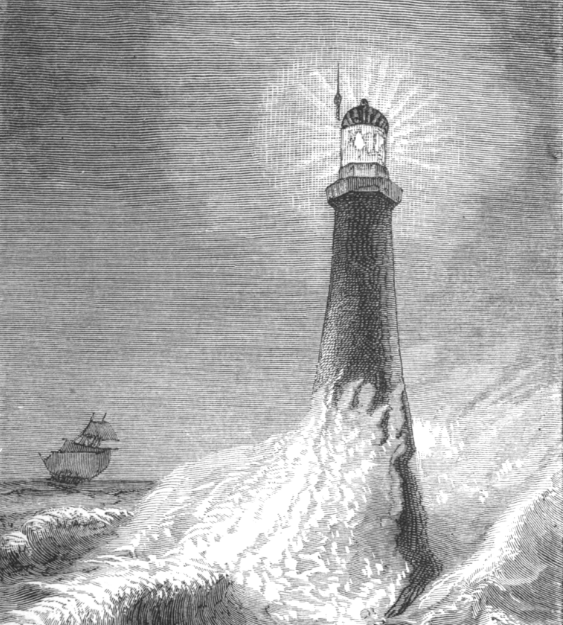
 All the storytellers that came before left something for those that came after them to use in ways they couldn’t even have imagined.  The storytellers and cinematographers of previous times didn’t have the cinematographic techniques we have in our contemporary era, the understanding we have of certain social issues, and the representation of various social groups we have now. They didn’t have certain creative geniuses we have now, the Horizon of expectations we have now. As such it would not only be unfair, but also wrong, to classify today’s Horror as simple copies and remakes. The movies mentioned previously as “Elevated” might take inspiration from the past but like those in that same past, they use it to make something new, to rebuild their own lighthouse that will guide the way to the future…
Categories
Cartoon Entertainment Horror Literature Movies

The Addams Family and Gothic love : A literary heritage.

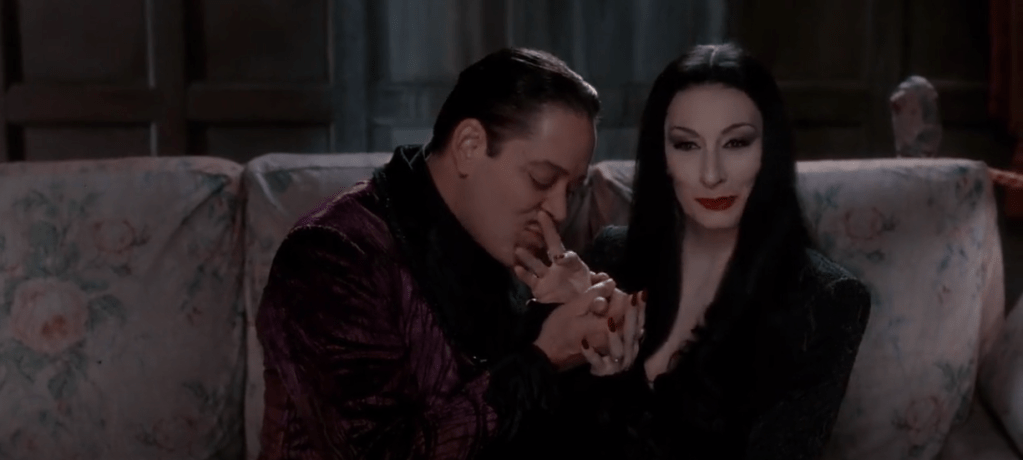
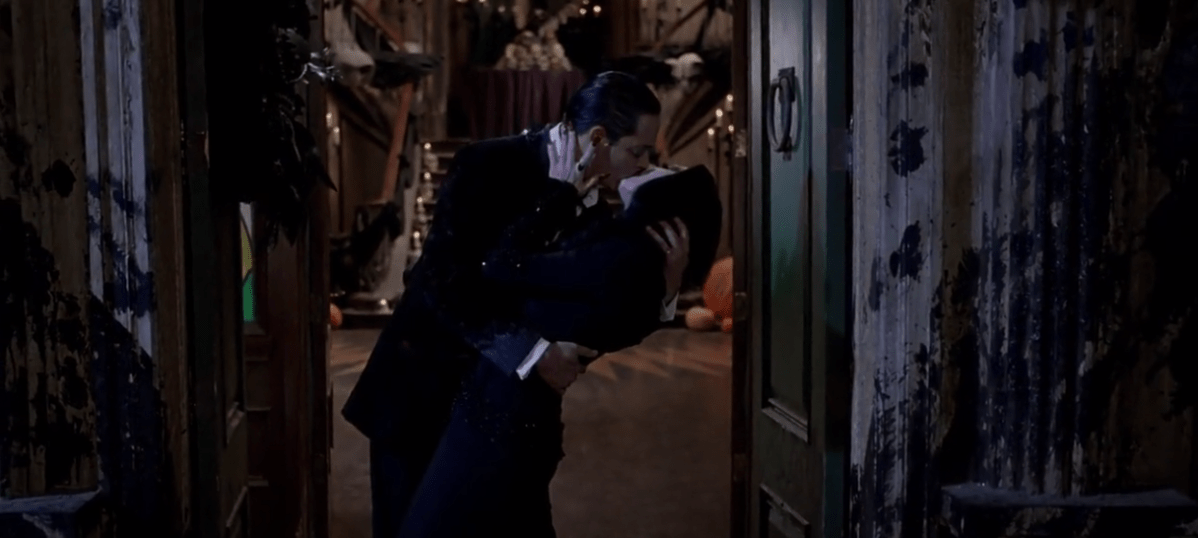
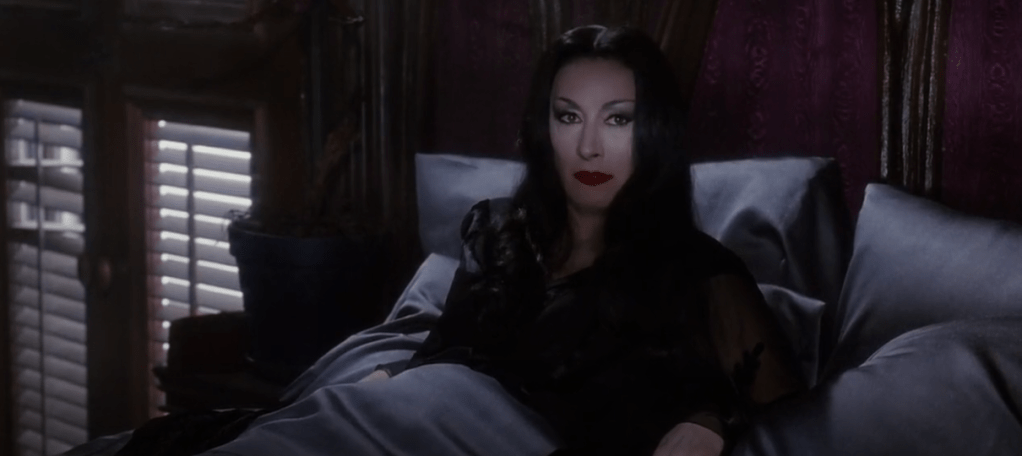
“I examined the contour of the lofty and pale forehead – (…) – the skin rivalling the purest ivory, the commanding extent and repose, the gentle prominence of the regions above the temples; and then the raven-black, the glossy, the luxuriant and naturally-curling tresses,(…)” This passage describes Morticia Addams almost to a T. We can almost imagine Gomez penning those words, in worship of his beloved. The key word being “almost”, because this passage does not describe Morticia Addams. It is not penned by Gomez. It’s not even taken from the Addams Family franchise at all. This is a passage from Edgar Allan Poe’s Ligeia, a short story published in 1838. While it is no secret that the Addams family’s universe is heavily inspired by gothic fiction, the similarities can be seen well beyond the works of Poe, especially when it comes to the depiction of love between Morticia and Gomez. Throughout the various depictions of the Addams couple, certain defining features remain and many of them echo gothic literary motifs associated with love and all its woes. But this begs the question: What literary motifs can we observe throughout Gomez and Morticia’s relationship in the Addams family franchise and what can it tells us of the shows’ gothic heritage when it comes to the depiction of love? We’ll mainly focus on the 1991 movie and needless to say, we’ll be taking a quick look at the Gothic novel and literary movement where it all started.

Physical appearance : 

The first gothic element seen in Morticia and Gomez’s relationship can be found, as mentioned earlier, in the appearance of Morticia herself. In all of the character’s interpretations throughout the ages, she always maintains her pallor and her iconic raven-like black hair. This physical mold, when it came to feminine lovers, could be observed in E.T.A Hoffman’s The Entail with Seraphine, as its earliest introduction. This element is put forward even more in Poe’s works, considering that it was often described by love-struck narrators, as seen in the citation above taken from Ligeia. There is a lot to be said in the depiction of women in Edgar Allan Poe’s work but this short story can also show us another defining characteristic shared by both Ligeia and Morticia: strangeness. To quote the narrator of the story again, “ ‘There is no exquisite beauty,’ says Bacon, Lord Verulam, speaking truly of all the forms and genera of beauty, ‘without some strangeness in the proportion.’ ”. To many modern viewers, the Addams family’s franchise not only acknowledges Morticia’s strange beauty and sense of style but revels in it, making it an essential part of her physical characterization.

Chivalry and courtly love  : 

The next element is linked to the relationship dynamic between Morticia and Gomez and Gomez himself: we’re talking here about Chivalry. From the earliest work of Gothic, The Castle of Otranto by Horace Walpole, chivalry played a significant role in the depiction of love, a depiction heavily influenced by the middle ages courtly love. We can see that in the love between two characters, Theodore and Matilda, belonging to medieval times. Theodore, proclaim to the woman he loves, his wish to come to her knight and as such to kill and potentially die for her. This is a sentiment that Gomez expresses on multiple occasions but it is also a sentiment he constantly acts upon, despite the relatively contemporary time of the story. In the Addams family 1991’s film, it starts of as a comedic element, with Gomez closing the blinds with his sword because the sun irritates his beloved. In the end of the movie, however, we can see that Gomez dueled a Tully Alford to save Morticia. We can see in Gomez’s supposedly chivalrous behavior, repeated in many other movie and series in the franchise, a remnant of gothic literature in the love he shares with Morticia.

Worship and obsession : 

Finally, the most poignant aspect of Gomez and Morticia’s love is the obsession and the subsequent worship of the loved women. The worship and sacralization of women by the man that loves them are observed in early works of Gothic, often associated with courtly love. However, it is also an element featured heavily in Poe’s works. In Ligeia for example, the women’s beloved by the narrator is seen as holy of course but also intellectually superior. She is someone worthy of worship and constant attention. He can’t give up on her even after death and she doesn’t give up on him either, the strength of her love supposedly bringing her back to him. The constant physical affection and literal worship exchanged between Morticia and Gomez, echo that sentiment. The couple even express in the Addams family (1991) that even a day away from each other would be torture.

Conclusion:

The Addams Family franchise made fan swoon with just a glance at the lovely couple made up of Morticia and Gomez. Many enjoyed their slightly obsessive but incredibly charming and romantic behavior. However, throughout their display of affection, Morticia’s physical appearance, as well as Gomez’s chivalrous behavior, we can see that the franchise owes many of its romantic themes to gothic literature.

Categories
Entertainment Horror Movies

Scream (2022) and its’ Meta cinematic legacy: Most memorable moments.

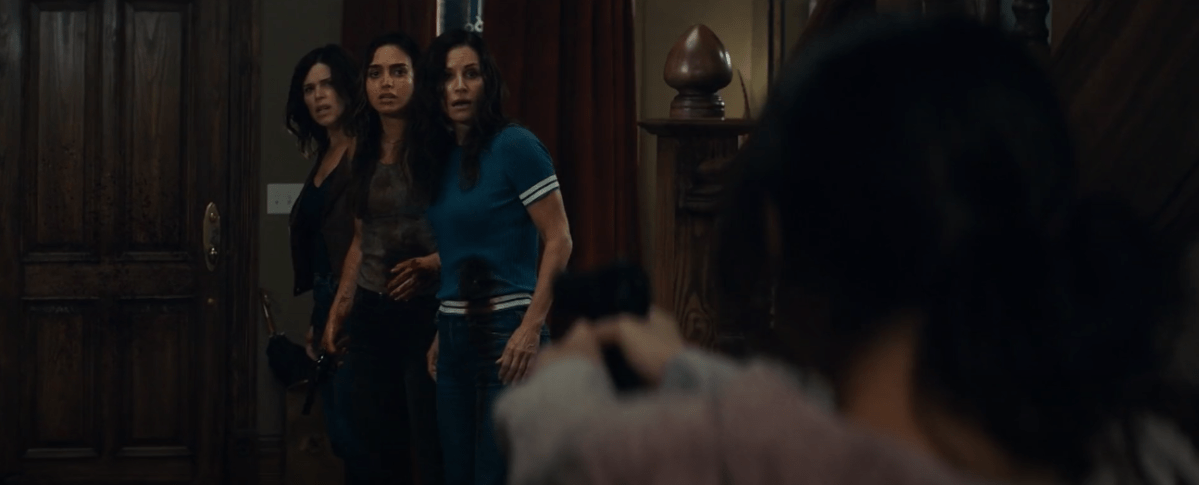
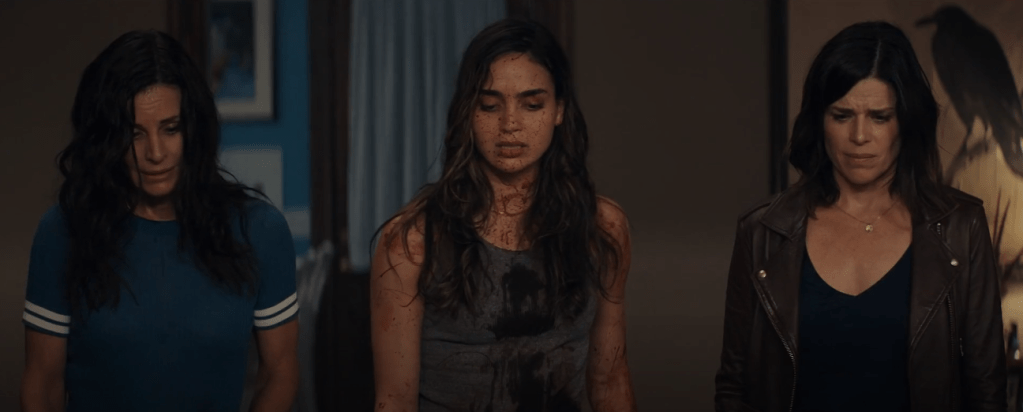
Meta cinema or Meta as we commonly call, it is an approach to movie making that is aware of its fictionality.  It blurs the limits between the viewer’s reality and the character’s reality, letting moviemakers indulge in some ironically self-aware humor to divert criticism or to incorporate some commentary on the movie word itself. Either way, it can lead to a very enjoyable viewing experience. The scream franchise, credited for bringing back slashers into the horror game, is a fan beloved because of its mix of horror and humor but also due to its Meta cinematic dimension. It stood out for its self-awareness which often makes known horror tropes the butt of the jokes while simultaneously mirroring the horror trends of its time. To quote what Randy’s niece said on the stab movies, they’re Meta slashers whodunit. Now, with the introduction of Scream (2022) and Scream 6 (VI) now out in theatre, the franchise is officially back with its murderous shenanigans. The first new arrival in this revival of the franchise is the first movie not directed by Wes Craven who died in 2015. It is the product of radio silence, a group of moviemakers consisting of Matt Bettinelli-Olpin, Tyler Gillett, and Chad Villella who or behind some of the best horror movies released in the later years, such as ready or not. This installation of the scream franchise follows Sam Carpenter, a young girl who returns to Woodsboro after her sister gets attacked by Ghostface. It introduced new interesting characters while bringing back some of the beloved originals like Sid Prescott, gale weather, and Dewey Riley. However, how well does the new Scream (2022) live up to the franchise’s meta-cinematic legacy? we’ll be looking at some of the most telling meta-cinematic moments in Scream (2022), or let’s be honest, Scream 5.

Needless to say, we’ll be delving into spoiler territory from this point forward. If you haven’t watched the movie, go ahead and do that before coming back to this article.

The opening scene: “It always started with a kill scene.”

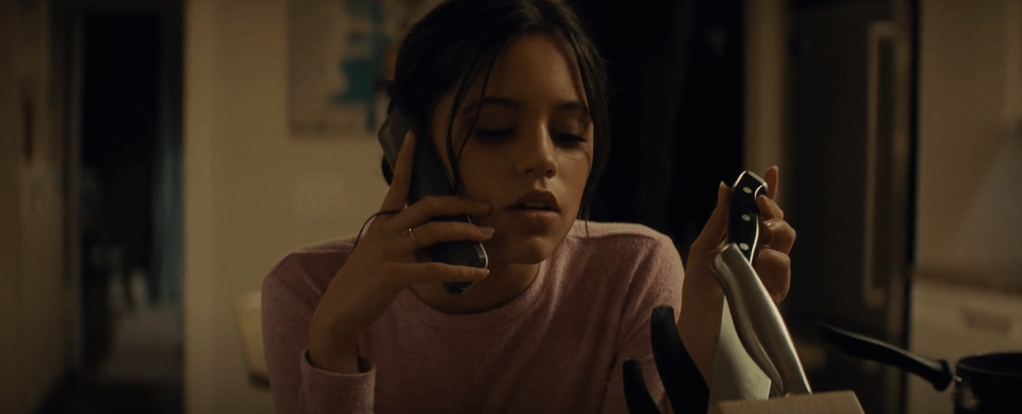
First and foremost, the opening scene is some of the most important moments in a scream movie, it can make or break it. With Tara played by Jenna Ortega, who also starred in Netflix’s Wednesday, as the first victim, this scene is particularly meta-cinematic, of course, due to the mention of the stab franchise that mirrors the scream franchise. After all, Tara said it: It always started with a kill scene. It’s meta-cinematic in the way it mirrors all the other opening scenes of the scream franchise with familiar dialogues or even familiar frames where Tara talks to the killer on the phone while playing with a kitchen knife. It also mirrors a certain opposition growing in the contemporary horror scene: the supposed feud between slashers movie and “Elevated Horror” that uses Horror as a vessel or allegory for different social and philosophical takes. Tara is a person who prefers the latter, mentioning various movies such as hereditary or it follows, even almost getting killed for her lack of knowledge about slashers and her preference for the Babadook. What makes this even more Meta, is that a lot of contemporary viewers might see themselves In Tara, which was the case for me honestly, and that adds a whole other layer to that opening scene.

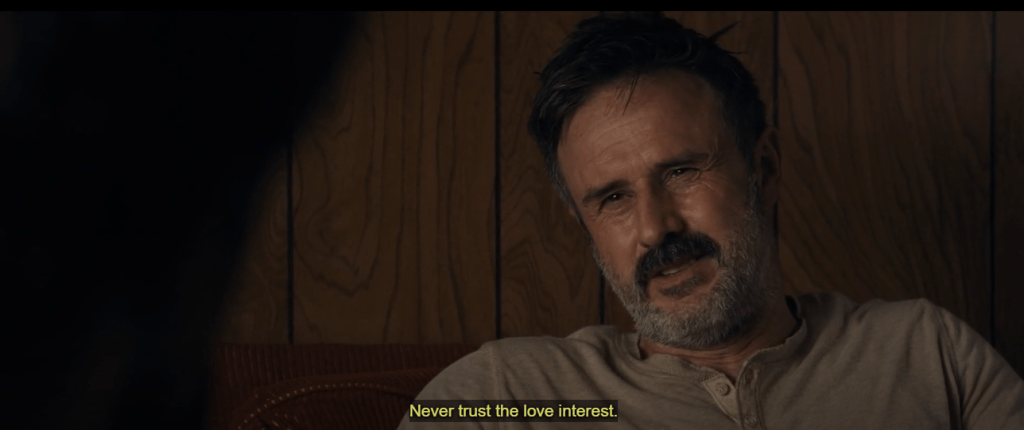
Dewey’s return:  “Never trust the love interest.”

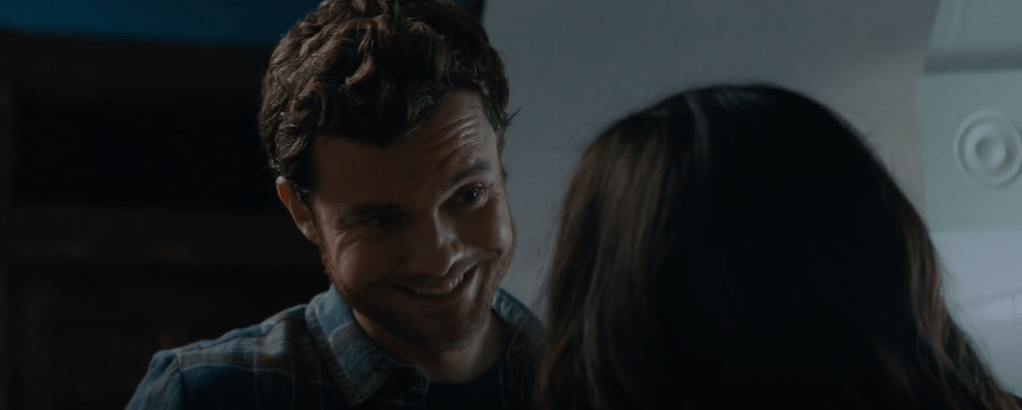
Dewey literally starts his conversation with Sam played by Melissa Barrera, by questioning her about her boyfriend and listing off the rules to surviving a stab movie, which of course applies to their situation considering the blurred if not non-existent limit between the stab movie and the characters’ reality: the scream movie. Which I find Meta as hell. This listing of the rules to survive a horror movie is a classic throughout the scream franchise, first with Randy Meeks throughout the initial trilogy, here with Dewey, and later on with Mindy, Randy’s niece. This approach to horror movies is a great way to show the movie maker are self-aware of the common tropes they are using and it plays on the humor of the characters falling for these exact tropes despite their knowledge of the rules. Both a criticism of itself and a comedy skit. Although, one thing stands out in Dewey’s speech considering how on the nose it is: “Never trust the love interest.”  According to him, despite how sweet and caring they seem, they’ll try to rip your head off in Act tree. Lo and behold, Richie, played by Jack Quaid, did exactly that.

Mindy’s expertise: “Oh my god he’s making a requel!”

Mindy, played by Jasmin Savoy Brown, certainly lives up to her uncle’s legacy in this scene. Not only does she describe perfectly the trends of “Requel” currently happening in the horror genre, citing a list of contemporary movies that fit the trend. She nails the killer’s motive while also reflecting on fans’ and movie makers’ fear alike when creating the Scream (2022). She also funnily enough shows some transparency between the production of the movie and the action of said movies by saying how the purpose was to introduce new characters while also bringing back the originals. She also mirrors the movie makers’ concern when it comes to making a new Scream move that pleases everyone. If that’s not Meta I don’t know what is.  She also says something important about the discourse between elevated horror and slasher movies when Amber mentions that there’s nothing wrong with elevated horror: “ Obviously, but that’s not stab”.   

The party scene: “For Wes!”

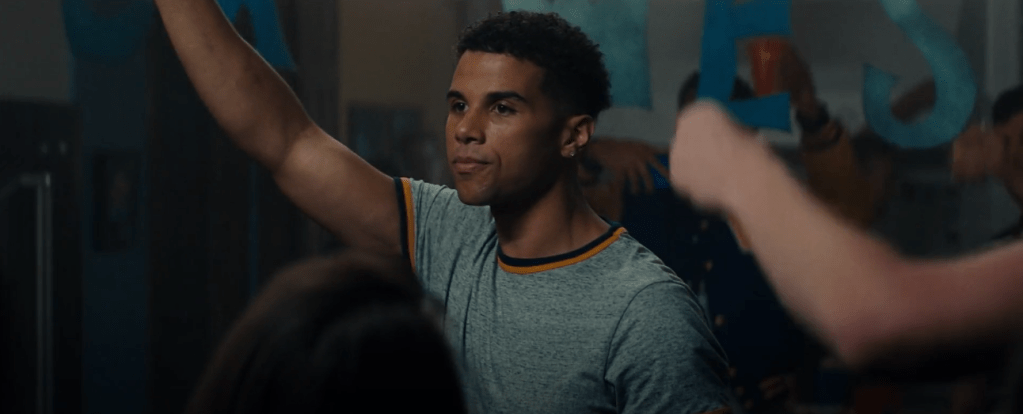
While not necessarily the most loaded, this scene is arguably one of my favorite meta-cinematic moments in that movie and I just had to mention it. In the movie, they are paying tribute to Wes, the character who died earlier in the movie with his mom sheriff judy hicks who is a returning character in the franchise, despite how cautious they were. This party is supposed to be a memorial, a celebration of life and chad does exactly that by taking a shot and cheering in his honor. However, this character isn’t the only Wes being celebrated. In fact, this scene was the movie maker’s way to honor Wes Craven, the director of all previous scream movies, a subtle nod to someone who changed the horror landscape for years to come. This is reinforced by the fact the current filmmakers, radio silence, dedicate this movie to him as is shown in the credit scene.

Mindy’s couch scene: “ No, Randy, look behind you.

One of the funniest meta-cinematic moments of both this movie and the original scream. We have a character telling another character in the movie they are watching to turn around. Ironically that’s what they should be doing too because Ghostface is behind them. We see Mindy watching randy in the same situation she’s in. Mindy, in a surprising show of self-awareness, does turn around, unlike her uncle, which gives her enough time to be saved by Sam. All around a hilarious tribute to the original. Without of course forgetting the exchange between Mindy and Richi when the latter was going to get some beer from the basement. He even says that he’ll be right back and they share a conspirator laugh over what Randy said one shouldn’t say a few minutes earlier in the stab movie Mindy was watching.

The killers’ speech: “How can fandom be toxic?”

Mindy’s guess of the killers’ motive was spot on: they are fan displeased with the sequel who wants to give Hollywood new material. This mirror the movie industry and toxic fandom culture. They even mention a meeting on Reddit, If that isn’t a mirror of real life I don’t know what is. While it can be funny, this is also a big commentary on the landscape of horror movie fandoms and it mirrors the struggle of movie makers. The killers are also aware of the way they and subsequently Scream (2022) follow the classic scream structure as Amber says: “Third act bloodbath, check. Killers revealed, check! Time for the big finale!”.

Amber’s Finale: “Time to pass the torch.”

Finally, while this scene might not be as full of meta-cinematic content as the others, Amber, played by Mikey Madison, expresses that the old characters’ story is over and that it’s time to pass the torch. This actually mirrors the stage at which this movie stands in the scream franchise. It’s somehow a transitory stage between the old characters and the new characters, between Sam and Sid, the old friend group, and the new friend group. This can be seen by the fact that the new upcoming movie Scream 6 features mostly the new characters for the expectation of Gale weather and Kirby reed. So in a sense, it was indeed the time to pass the torch.

Many other meta-cinematic moments were present in the movie but to keep it brief we limited this article to the most major ones. As such don’t hesitate to tell us what we missed in the comments! But, in conclusion, we can say that Scream (2022) definitely lives up to its predecessor meta cinematic Ambitions, all while adapting it to a new contemporary audience through classic humor, honorable mentions, and well-placed commentaries on the horror genre and its fans. However, will we be able to say the same thing about scream 6 (VI)?

Categories
Art Entertainment Human Rights Literature Music

An act of artistic solidarity: How Hozier stand with women’s rights in “Swan upon Leda”.

As far as literary history can go, we have always used music and literature as a medium of change. We smuggled revolutions between the verses of poems and sang hymns of freedom in the hopes it would lead us out of oppression. If there’s one person that has proven how masterful they are in merging the wonders of music and literary symbolisms in service of humanity, it’s Hozier.  From “Take Me To Church” to “Nina Cried Power”, he has never shied away from singing what could be seen by many as a call to action in the service of human rights. His latest song, “Swan Upon Leda” is one such case, but to truly understand the ingenuity used by Hozier to pass along his message of support to women all around the world, we’ll have to delve a bit into the world of literature.

Table of content:

First, let’s take a closer look at the title:

Because, who is Leda, and what does a swan have to do in any of this? Well, a lot.

In Greek mythology, Leda, once a Queen of Sparta, was tricked by Zeus when he transformed himself into a swan, and under the guise of fleeing an Eagle, injected himself into her bed resulting in sexual intercourse. For years, the motif of Leda and the swan has been a favorite of poets and artists. However, it is only recently that it has been recognized as an act of rape and violence against women instead of the erotic imagery it has been portrayed as.  One of the most notable poems of that kind called “Leda and the Swan” was written by one Irish poet called William Butler Yeats who won the 1923 noble prize for literature.

Here in this song, Hozier shows us a new perspective on this tale as old as time:

What happens after the Myth.

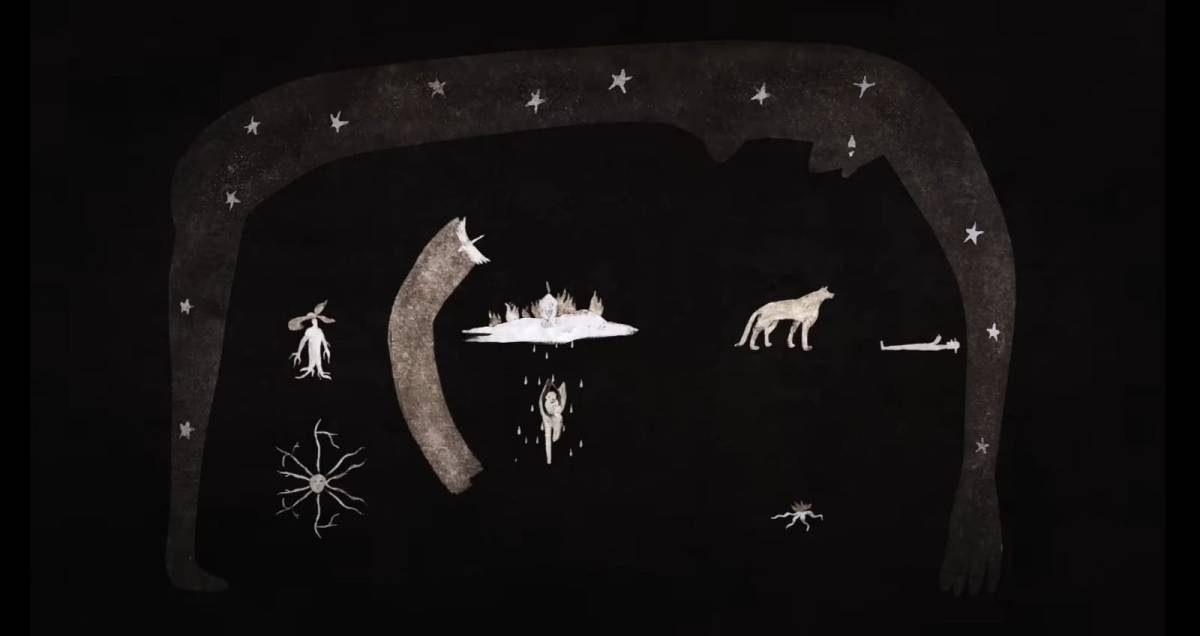
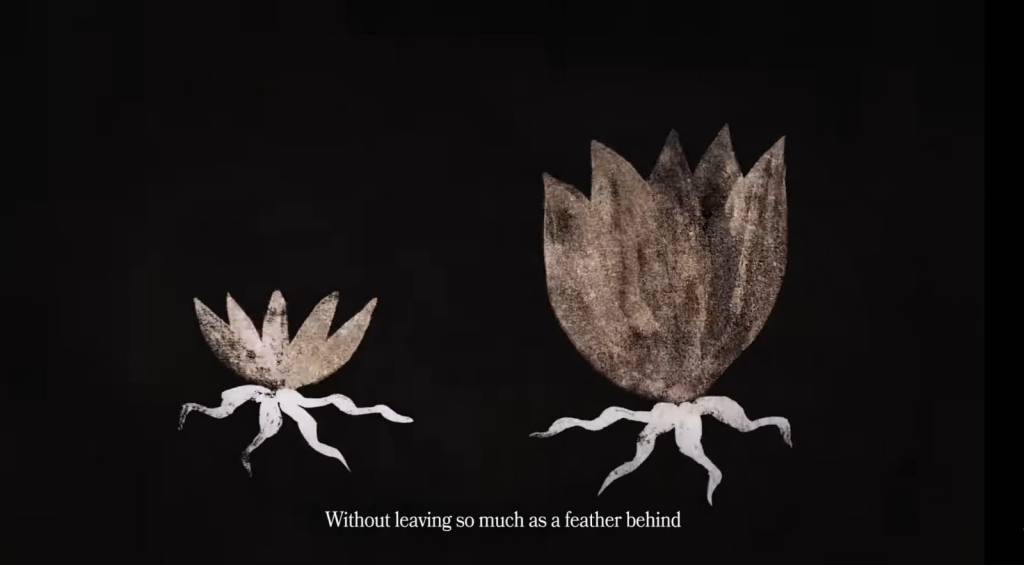
Hozier opens up the song with the following verses: “A husband waits outside A crying child pushes a child into the night”. These words describe the theatre of birth except here its cruel nature is shown by referring to the person who is giving birth as themselves being a child, giving us the feeling that maybe they shouldn’t have been giving birth at such a young age. We can see that this is the aftermath of the myth previously mentioned with the help of one specific word used to talk about the husband in the following verse: “Without leaving so much as a feather behind”. The feather is here referring to the swan.

This already gives us a hint about what the song will be focusing on, mainly women’s productive rights.

With all that in mind, we can already see why Hozier chose to reference that Episode of Greek mythology but it fits, even more, when we take a closer look at Hozier’s inspiration for making his song:

Mona Eltahawy and The Oldest Form Of Occupation.

The way Egyptian journalist and author Mona Eltahawy described the systems that oppress Women as the oldest form of occupation is something that stayed with Hozier a long time after he heard her speak in Dublin and that vision is something constantly present in the lyrics of “A swan Upon Leda”. For one, he referred to the myth of Leda and the swan in lyrics such as “The swan upon Leda” present in the chorus. We also see many metaphors using the occupation of land to describe the oppression of women like in the lyrics “Empire upon Jerusalem”. I find it very fitting to use a holy city such as Jerusalem to symbolize women’s reproductive rights considering how many empires tried and failed to hold on to it permanently.

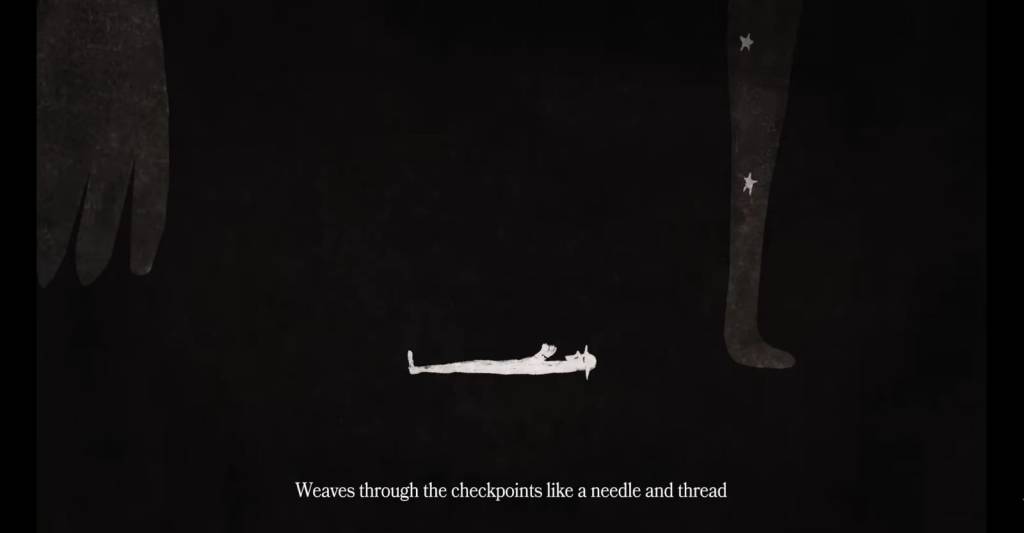
In other instances, the song paints the oppression of women as an occupation by using military imagery with the mentions of child soldiers, guns, borders, and checkpoints such as here: “Weaves through the checkpoints like a needle and thread”.

However, Hozier goes beyond just focusing on the occupational aspect of oppression. He showcases how it’s an oppression that transcends times by blurring the timeline of human history.

A merge of the present and the past.

In the description of the song on YouTube, Hozier mentions that because of the mass protests happening in Iran and Roe v. Wade being overturned, he felt now was the right time to release “Swan Upon Leda” in a show of solidarity. It is before anything, a song engaged in the present, commenting on international attacks on women’s rights but Hozier shows that in a very particular way. He draws a parallel between current events and ancient events, occasionally blurring the boundaries. Hozier expresses his stand on Roe V. Wade being overturned with the use of an ancient Greek myth as mentioned previously. He also uses the term “gateway to the word” to refer to the act of giving birth, putting it in parallel to Jerusalem and Leda.
Additionally, He expresses the injustice of forcing women to give birth as a part of the “Perfect Plan” (“To enact at last the perfect plan”).

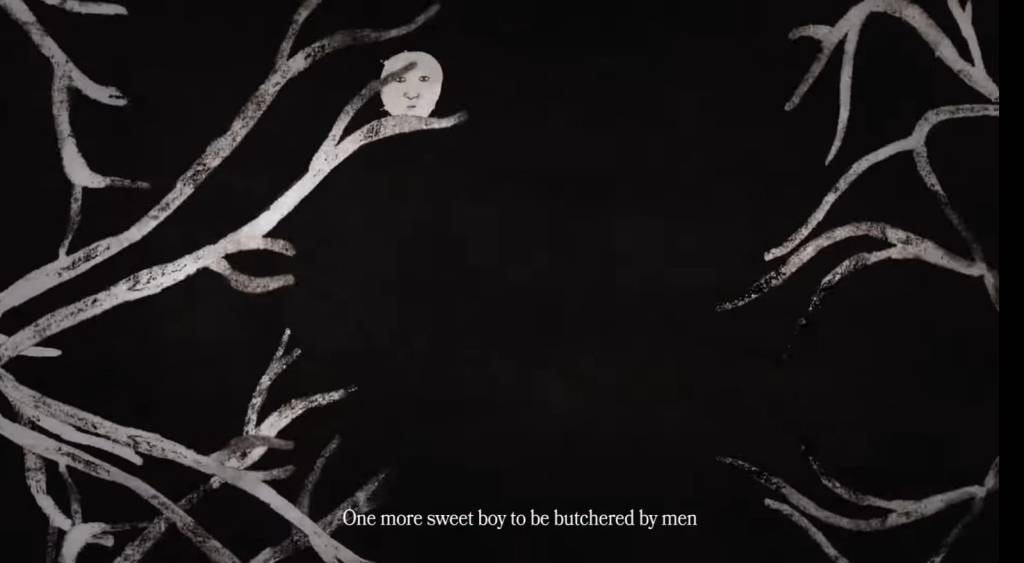
He also talks about toxic masculinity briefly in the following verse: “One more sweet boy to be butchered by man”

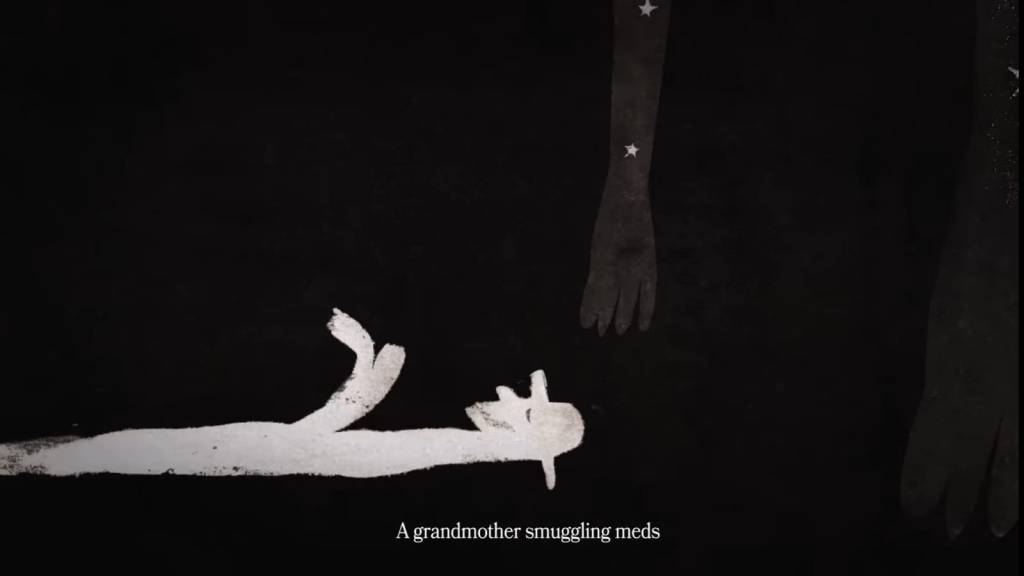
The second subject of actuality is the reproductive rights of women in Ireland. Abortion rights have been a sensitive topic in Ireland for a while with it being legalized as recently as 2018. In the following verses, Hozier draws a parallel between the Irish mythical figure of Setanta and an old woman smuggling pills that seem like they could be contraception.

The fact that it is a grandmother and not a young woman who is smuggling the medicine is also something that shows how these issues transcend time and generations. It also exhibit a show of solidarity between women of different generations.

Finally, Hozier comments on the way certain people try to use religion as an excuse to limit the rights of women. To him, their choice to give birth would never belong to angels and had never belonged to men.

Many more can still be said about this song as the interpretations are endless, but one thing’s for sure: Hozier knows how to make a stand.

Categories
Art Entertainment Literature Webcomics

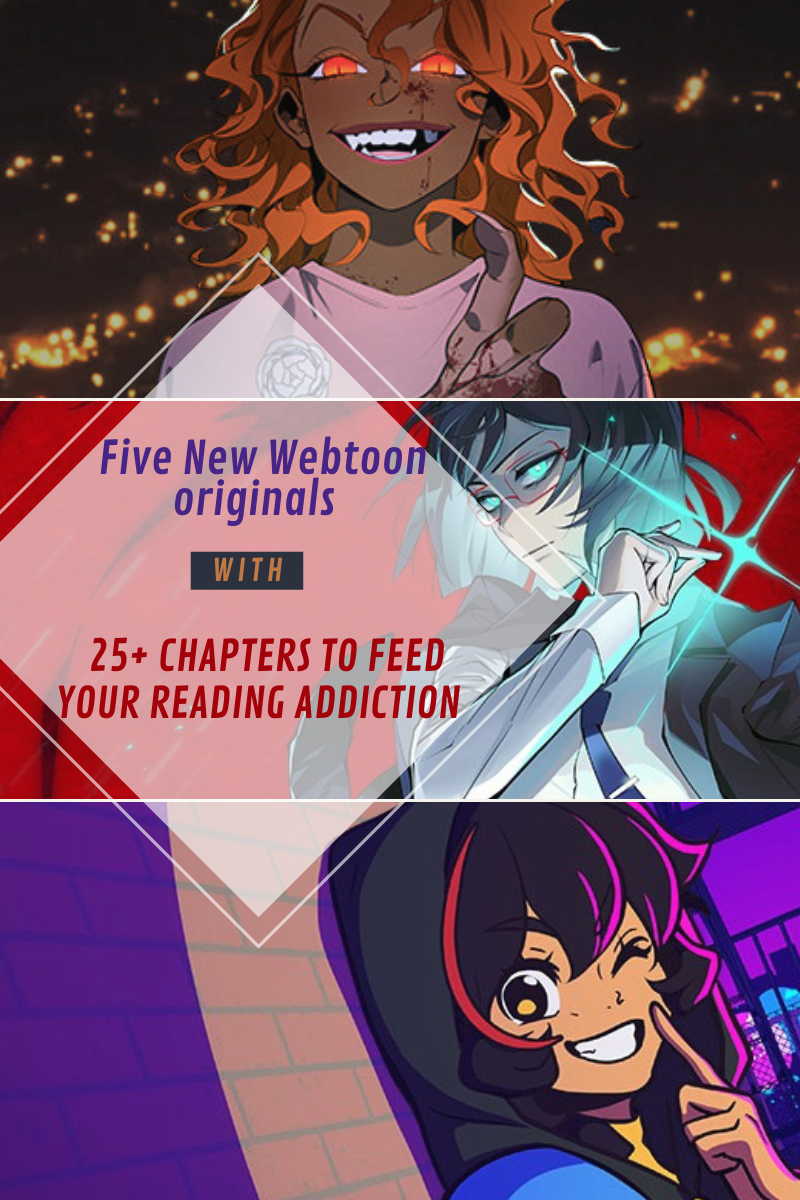
Five new Webtoons original with 25+ chapters to enjoy

The storytelling medium of Webcomics and Manhwua might be considered pretty new by some, but never less, their influence seems to grow more and more as each day goes by with the webtoon platform being a key element to its popularity. With works such as Noblesse, My dear cold-blooded king, and much more, there are more than enough stories on webtoon to please anyone who wishes to delve into the world of webcomics for the first time. But what about seasoned readers who already got through all the classics? Webtoon does release its fair share of new works, in all fairness, but the amount of available content is often unfulfilling, with its three-chapter introductions. Are we forever doomed to read comics that pique our interest but leave us with little room to properly get into the story? Not anymore with the help of this list. Here are five newly released webtoon originals that both still feel fresh but got at least 25 chapters published for your enjoyment. Anyone can find their next read here, whether you’re a fan of romance, action, or mystery!

Table of content:

21st Century Knights (29 chapters):

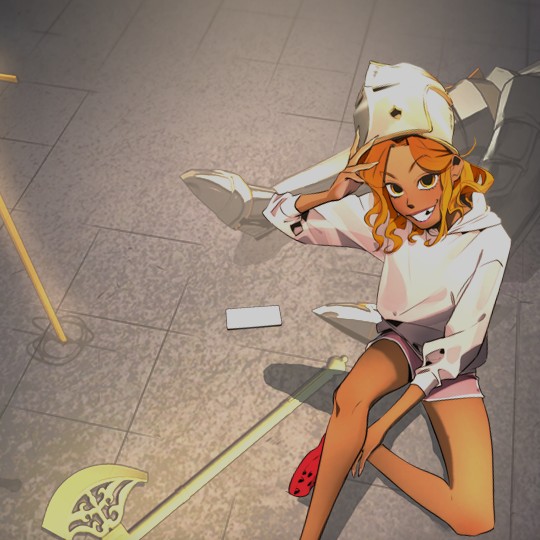
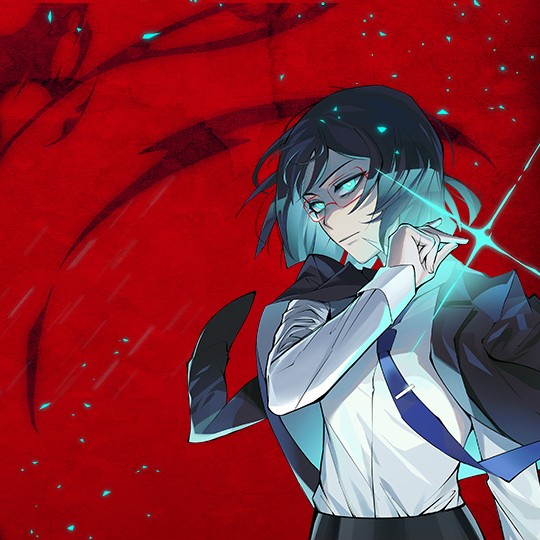
Knights make their comebacks in this action-packed webtoon. However, forget the whole swords and armor imagery, because these modern knights are gifted with a special weapon of their own called “Animas”. The strongest and most noble of all can even get the chance of joining the elite order of Knight who serves and protect the people. Luckily, Our main character Theresa would fit right in with the order, as she often undergoes the noble and chivalrous practice of coming back home in the dead of the night with blood-covered hands. Anyways. Everyone got their motivations, and Theresa would do anything she can if it means finally finding the mysterious silver-haired knight she’s been looking for. Her pursuit might lead her to something else entirely, however, something far more sinister…
Bonus points: A morally grey main character with OP and mysterious powers who always look dashing in crocs.

Nevermore (30 chapters):

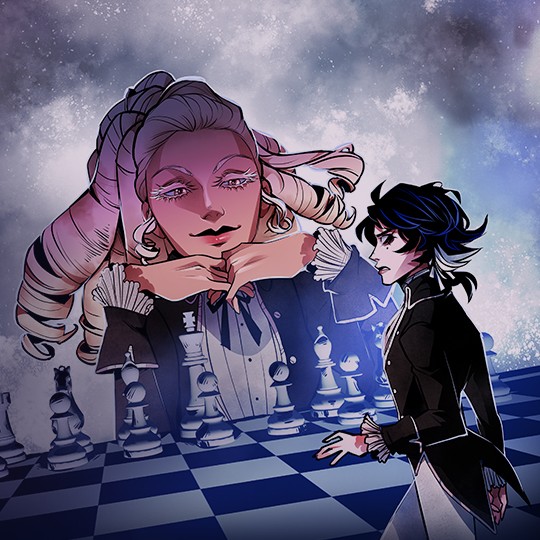
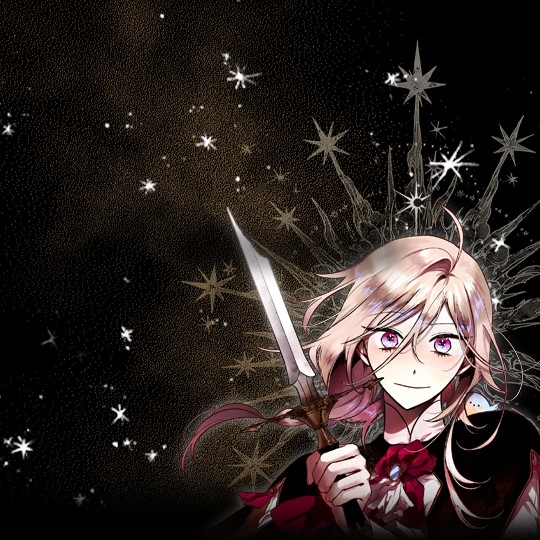
Fans of Gothic literature might have already deduced so from the title, but this Edgar Allan Poe-inspired comic takes us on an adventure into the mysterious Nevermore Academy, where graduating means a second chance at life! As our main characters Lenore and Annabel Lee have realized, this school is what lies beyond life and death. However, what lead them there and the circumstances of their tragic end are hidden behind a wall of shrouded memories. They will have to work together to uncover the answers through macabre and spectral shenanigans. The art is also mesmerizingly beautiful and does the atmospheric aspect of the Gothic genre justice. To use the words of the webtoon itself, it’s spooky, gothic, and sapphic, what more could anyone ask for?

Bonus point: The art style of this webtoon is a real treat with beautiful music and animations.

Hand Jumper (26 chapters):

Some people here have special powers!  Everyone must be so happy with these so-called Aberrant right?…. Right? Okay, maybe not. In this universe, Aberrants are considered to be agents of chaos, menaces to society, who need to be kept in check and put to good use in the Aberrant Corps. Nobody would agree with this view of the world more than our main character Sayeon Lee, but when it turns out that she is an Aberrant herself, she gets sent to the corps, where the chances of survival are…minimal to say the least. Her special power might prove itself really useful right now if only she can figure out what it is. Cue in lots of beautifully drawn action, soul searching, ideological conflicts, and, surprisingly, family drama. In this webtoon original, nothing is as it seems but, Well, one thing’s for sure, the title of that one doesn’t make much sense really …or does it?

Bonus point: Well-done action scenes with an interesting set of characters and idealistic conflicts that gives this webtoon depth beyond a quick rush of adrenaline.

Here There Be Dragons (31 chapters):

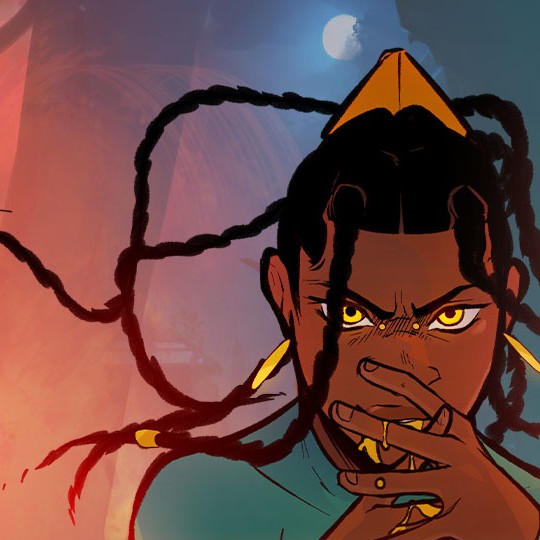
Who doesn’t love dragons? They’re a beloved staple in the fantasy genre after all, and to this webtoon’s universe, they are the pillars that hold the world. However, one of these ancient dragons is dying and only Bree, a dragon speaker, was able to receive the dragons’ urgent warning. She must assemble a team of designated individuals to follow her on her journey to save the dragon and restore the balance of the world!

Bonus point: Glowing, immersive art fitting the fantastic world-building, found family trope, and casual trans representation!

 Señorita Cometa (26 chapters):

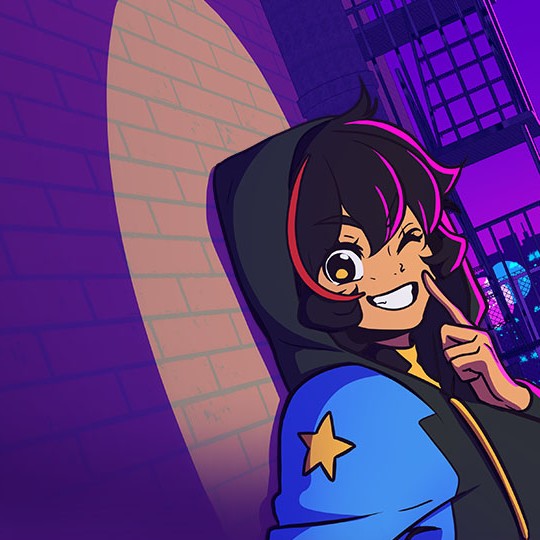
This mystery webtoon original is a perfect blend of investigative and heist fiction with its vibrant color pallet and an eccentric set of characters who delves into adventures both in and outside the law, all to help people and save those they care about. Dissatisfied with the police’s inability to find her missing best friend in a city controlled by two opposing mafias, our main character Alex decided to take things into her own hands! Using her IT  knowledge and her experience in parkour, she takes the identity of Phantom Thief Cometa and goes about uncovering the secret the city of Yoalco has to hide. Daring escapes, hidden identities, hacking, corrupted politicians, and fancy gadgets are all on the menu in this gripping story.

Bonus point: Wrapped in layers of mold-breaking characters, comedic scenes, and dynamic music, this story actually brings awareness to very serious and very real problems such as the trafficking of young women.

Honorable mentions that didn’t make the cut:

The dark lord’s confession (12 chapters):

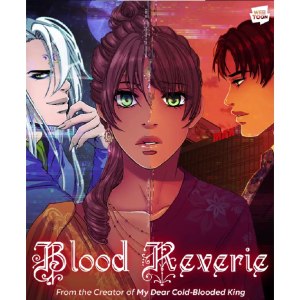
Blood reverie (18 chapters):

The products of human imagination will never cease to amaze the masses and for good reasons, so hopefully, this list will help those who thought they saw everything, find their next intriguing read.

Categories
Animation Art Entertainment Literature

Arcane’s Jinx and the ancient Greek archetype of the tragic hero.

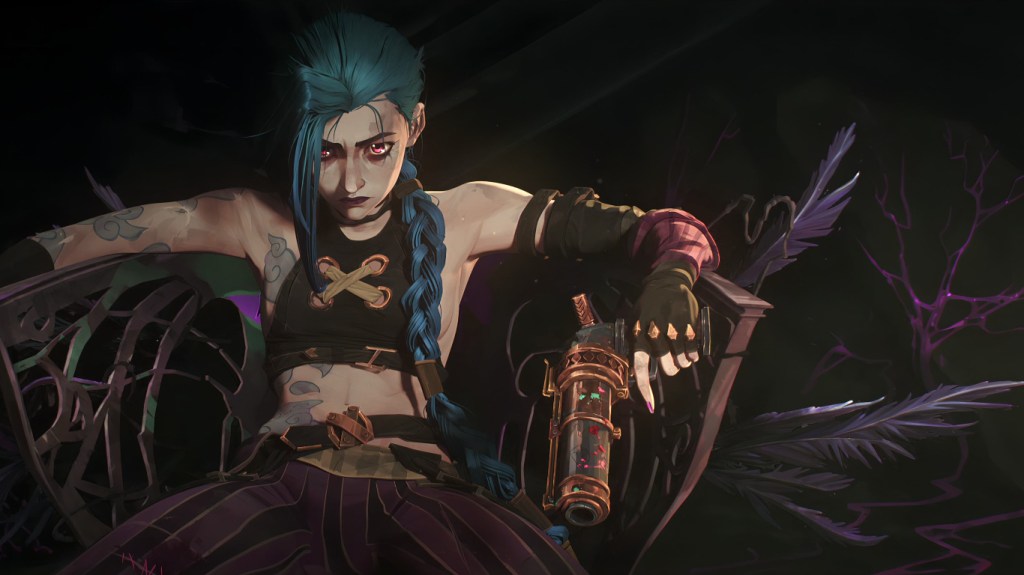
Storytelling, in its nature, is a group effort. We build stories upon stories, break up old ones and build something new from the pieces left, or get inspired and influenced by complex methods that migrate along different mediums to create something both new and familiarly old. This intertextual dimension has never been more apparent than in the new league of legends inspired show Arcane by Riot Games and Studio Fortiche. While there are many apparent parallels between ancient Greek theater and this show such as its theatrical narrative structure of three Acts, we’ll be focusing on one specific aspect: Jinx, one of the two sisters who this story revolves around. Following the characteristic of a tragic hero using Aristotle’s Poetic among other things, Jinx might just be a modern-day Oedipus, whose only companions seem to be misfortune and irony. But jinx is a new character, born from a creative medium that would have been unimaginable to the ancient Greeks, and as such, the way this literary archetype manifests itself in Arcane is bound to be just as uniquely familiar as jinx herself. In this article, we’ll delve into the characteristics of a tragic hero we can observe in jinx.

Spoiler warning: the following contains spoilers for Arcane season 1.

1. Jinx and the catharsis :

One of the most emblematic aspects of Greek tragedy according to Aristotle, is the concept of catharsis, the purging and manifestation of intense emotions through art, mainly pity and fear. For Arcane’s viewers, Jinx does a great job of doing exactly that. On one aspect, they are clearly meant to pity jinx because of the unfortunate circumstances of her upbringing in an oppressed Zaun, because of the traumatic experiences she went through, the loved ones she lost, and the way she’s suffering as a result of it. But on the other hand, these experiences created a jinx that is highly unstable, chaotic, and powerful but destructive. We can see that Jinx is capable of irreversible harm from the end of act 1 to the last scene that ends with her Hextech rocket headed toward the council’s chamber. Additionally, some part of the viewer doesn’t just fear jinx and her actions but also fear that what happened to Jinx, these experiences, such as the death of a loved one, which are at their core universal human experiences to some extent, might just happen to them someday, that if they were in her place they might have become the same. Ultimately, Jinx throughout her journey shown in Arcane leaves the viewer torn between crushing feelings of pity and fear, which fit exactly what is expected of a Tragic Hero.

2. Right intent, wrong actions:

Another important element of a tragic Aristotelian hero is that they are noble individuals with “pure” intent who only did wrong as a result of a human error. As shown in the first Act of the show, Jinx’s only motivation is not power or greed, it’s not revenge, or any typical « evil » goal. what drives her action is her desire to help, to be useful to those she cares about. She went after vi and vender in Act I after realizing that she can use the Hextech crystals to help them. However, because of an honest mistake, she ended up doing something horrible she didn’t intend to do. This pattern constantly repeats itself throughout the show: jinx tries to help Silco by bringing him the Hexcore, killing a dozen enforcers on the way, instinctually tries to protect Vi, and ends up shooting Silico… All of Jinx’s morally questionable actions are a result of poorly executed good intentions.

3. Heroism as an agent of tragedy:

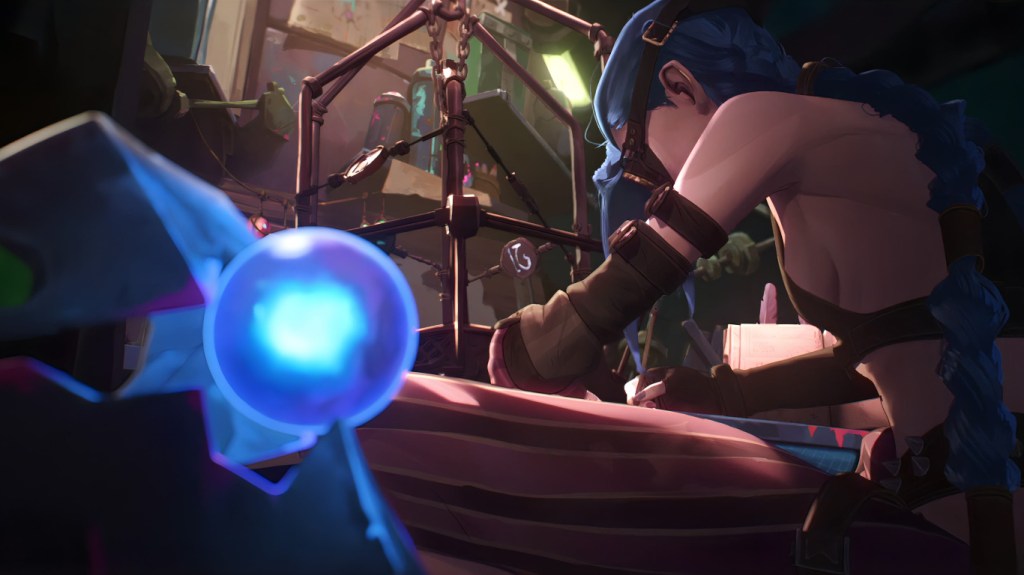
Considering that it’s in the name, a tragic hero to Aristotle is before anything, well, heroic, but in a show of dramatic irony, it’s exactly what leads our characters to their downfall and jinx is no different. Jinx has all the characteristics associated with heroism: she has relatively good intentions as mentioned previously, she’s distinctively smart and innovative to the point where even victor praises her work, and she tries in her own way to right the wrongs of her word embodied by the oppression of Zaun.  But again, it’s these heroic characteristics that drive her to sabotage herself and even have the capacity to go through the actions that cause her pain and suffering: if jinx wasn’t smart enough to figure out how to build her own Hextec weapon in Act III, didn’t wish to honor Silico one last time and « show them all » the worth of Zaun who they wronged, things would have ended very differently.

4. The irony of fate:

One of the most marking characteristics of Greek tragedy as a whole, is the presence of an inescapable fate, a destiny dictated by distant gods. The tragic irony of these plays lies in a hero, whose efforts to escape their predestined and prophesied fate, end up fulfilling it like Oedipus who came face to face with his fate while running away from his adoptive kingdom in an effort to escape it. While we wouldn’t exactly talk about fate in a traditional sense when talking about arcane, as five by five takes puts it in their Youtube video concerning Arcane, the determinist nature of Arcane’s universe is born from power structures and institutions that were here way before any of the characters but also acknowledge the decisions of the characters themselves. For jinx, her « predetermined » role as The Jinx, was already established in her youth by Milo, almost like a prophecy, and since then jinx tried to do everything in her power to disprove that, to show that she can help those around her and that not every project she’s a part off go south. But it’s exactly that eagerness to prove herself useful, to discard her role of jinx, that ends up fulfilling it. It is also interesting to mention that considering that Arcane follows the game of leagues of legends to some extent, powder becoming jinx was also something already predetermined in that aspect by the lore.

Overall, jinx is a complex character whose heritage seems to belong to the depth of the literary world but is also the labor of love and innovation of the Arcane writers who were able to breathe a new life into old and overused concepts in a way that serves modern media and create a fascinating character you can’t help but want to know more about in the next season of the show. 


Categories
Art Entertainment Music

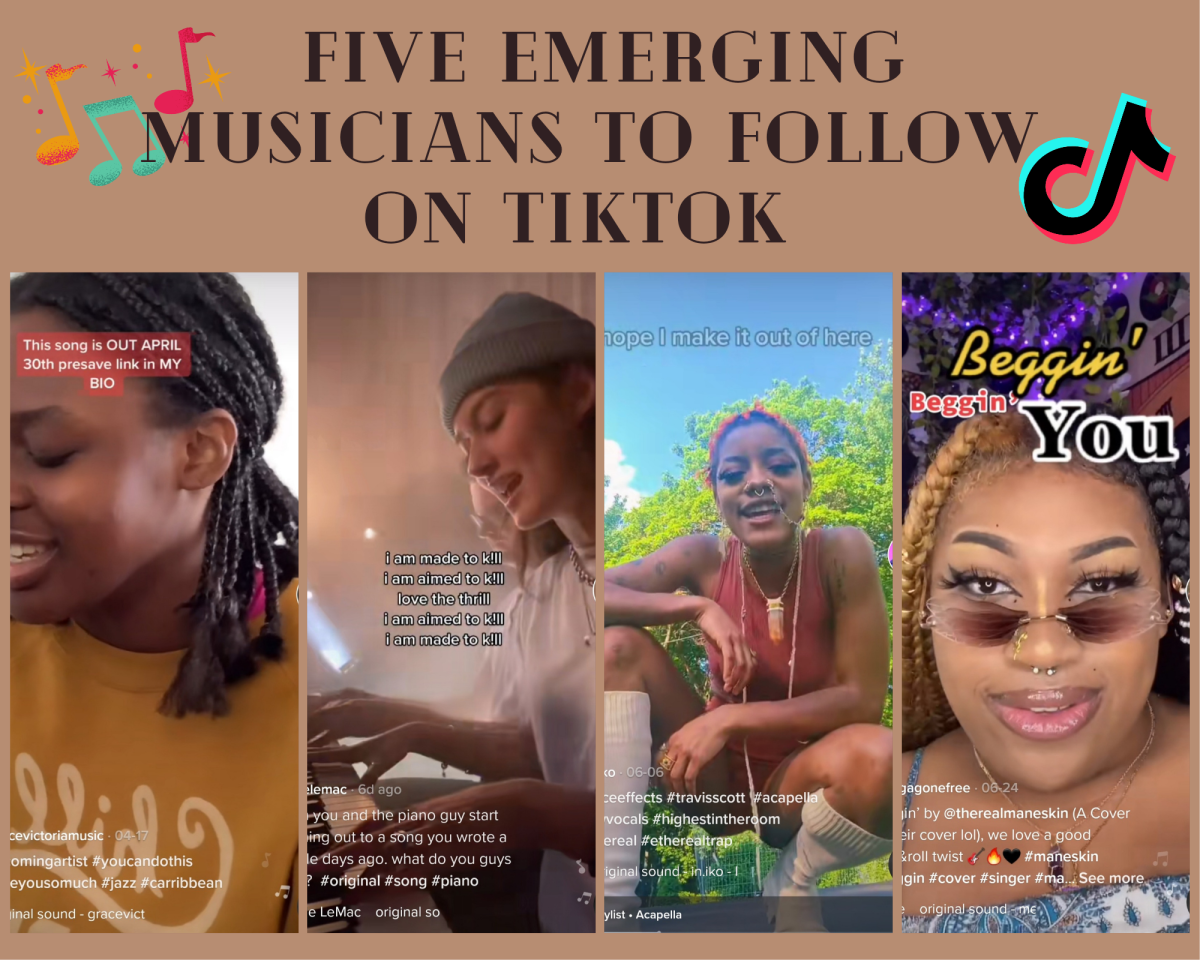
Here is five emerging musicians to follow on TikTok.

Scouts used to search for talents in run-down pubs, and musicians used to seek radio singing competitions to make themselves known to the world. But with the invention of the internet and everything that came with it, aspiring singers and musicians got multiple doors opened into the industry with the help of more accessible pieces of equipment and social media platforms. However, one social media today has proven to have an immense influence on the modern music industry, that would be TikTok. This App is considered one of the best places to get your songs seen or have your fill of musical entertainment, whether through covers, trends, or talented singers. Those familiar with the platform must have stumbled on at least one aspiring singer while scrolling through their For Your page, but for those who seek to diversify their music taste or discover interesting new artists, here are five emerging Musicians to follow on TikTok.

SOLOMON (@solomonmusic)

Solomon is a singer-songwriter from London whose primary genre of music includes R&B as well as hip-hop. On his TikTok page and his Instagram, he can be seen covering songs by artists such as Shilo and brent Faiaze under the hue of warm purple led light. His voice charms the listener with its enchanting and gentle tones, and his guitar skills help immerse the listener and highlight the emotions found in his voice. He can be found on Instagram, Spotify, Apple Music, Youtube, and more for those that wish to see the full version of his performance.

Megagonefree (@megagonefree)

@megagonefree

Widen The Screen by Me :), Black depiction in media is worse than ever, it’s time to change the narrative! #PGPartner #WidenTheScreen #Musician #blm

♬ original sound – MegaGoneFree

One of the most interesting performers on TikTok, Mega’s main genre would be pop. With her iconic glasses, she can be found on TikTok performing popular songs as well as those born from the depth of her imagination. As someone who considers music to be « more than singing and can be used as a creative outlet, » according to an interview with Baby Balou Zine, she delivers every song she covers with energy and emotion, sometimes adding her own twists to the enjoyment of her listeners. Furthermore, the sound of the ukulele, which always accompanies her performances pairs, well with her deep and strong voice to give the listener a unique experience. As of now, mega has three released singles, the newest being « CTRL+DEL,» which can be found on Spotify and more. As for mega herself, she is on Instagram, Youtube, and Twitter, additionally to TikTok.

Iniko (@in.iko)

One of the resident TikTok creators to follow, Iniko, is an independent singer and songwriter whose mains genre of music would be considered indie soul. As someone who would describe their music as « ethereal,» this singer/songwriter has a unique brand of music to offer their listeners. Indeed, whether it’s an original song or a reimagined cover of a famous single, each video by Iniko is unique in its own way. Their husky voice and captivating lyrics transport the listener to a brand new word born from the musicians’ creativity and self-expression. Most of their performances are acapella, which enhances the unique attribute found in their voice and techniques. However, in some cases where the viewers get to listen to an already released song of theirs, Iniko’s producing and multi-instrumentalist talents become apparent. Their latest singles, « Luna » and « 444 » can be found on Spotify, Tidal, Soundcloud, and more. As for Iniko themselves, they can be found on Instagram additionally to TikTok.

Grace Victoria (@gracevictoriamusic)

With her primary music genre being Jazz, the young singer-songwriter Grace Victoria charm the listener with her beautiful voice and enchanting piano notes. Her music is both familiar in its classic inspirations and new in her renditions of them. However, her music isn’t only aesthetically beautiful, but her lyricism is bold, proud, and inspiring in its mission to give the listener insight into Grace Victoria’s experiences as a black woman, like in the single « Down in Virginia» or express the singer criticism of others such as in the single « Black looks better on me»  Her latest single « Guilty », as well as her other singles can be found on Spotify, Apple Music, and youtube. As for Grace Victoria herself, she can be found on Instagram additionally to Tiktok.

Jade LeMac (@jadelemac)

@jadelemac

when you and the piano guy start jamming out to a song you wrote a couple days ago. what do you guys think? #original #song #piano

♬ original sound – Jade LeMac

Last but certainly not least, Jade LeMac is an aspiring pop singer-songwriter located in Vancouver, Canada, with one single out as of now, titled « Constellations .» However, don’t be fooled by her small number of singles; her beautiful voice, fun music, and sensual lyrics have bought her newest single a lot of attention on all platforms with 170,818 views on youtube as of now. Additionally to YouTube, her latest single can be found on SoundCloud and Spotify, and Jade LeMac herself can be found on Instagram, Twitter, and, of course, TikTok.

Categories
Cartoon Entertainment

The use of the Language of the First Ones in “She-Ra And The Princesses Of Power”.

“She-Ra And The Princesses Of Power” is the kind of show that stays with the viewer, one that they come back to, and one that they can watch a million times and still notice new things every time. From the great representation to the interesting storyline, it’s clear that Noelle Stevenson and the crew behind the making of the reboot had put a lot of care and work into every detail that make up the show. There are many aspects worth talking about, such as world-building, character development, and more. This article focus on the language of the first one used throughout  « She-Ra and the princesses of power » as this often-overlooked element plays a bigger role in the show than one would think.

With the lack of information given by the studio about the language of the first ones, a general analysis of the show is important in this case, so beware of spoilers.

A month before the release of the show on Netflix, The official Twitter account released a guide on how to read the first ones’ language, likely as a marketing scheme, and it’s the only piece of information given about the language of the first ones’. According to the official guide, The language in question uses a phonetic alphabet that associates shapes with sounds and that it roughly translates to English. So whether it’s a new language or just a different alphabet to write English in, is up for debate. As such, the focus will be put on the alphabet itself.

The Alphabet of the first one and what can be taken from it:

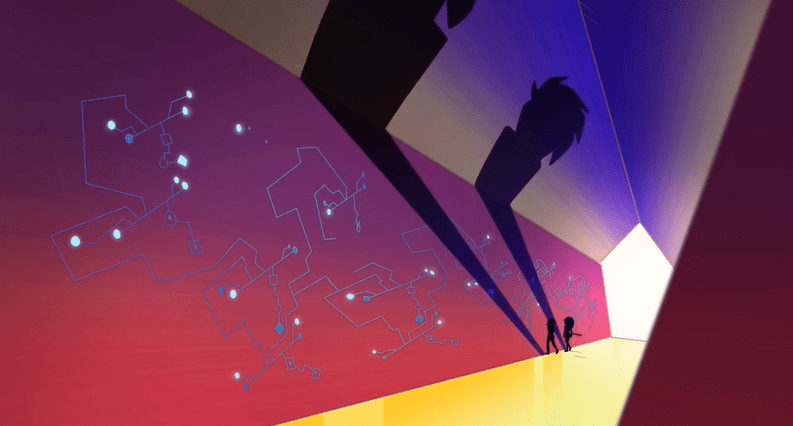
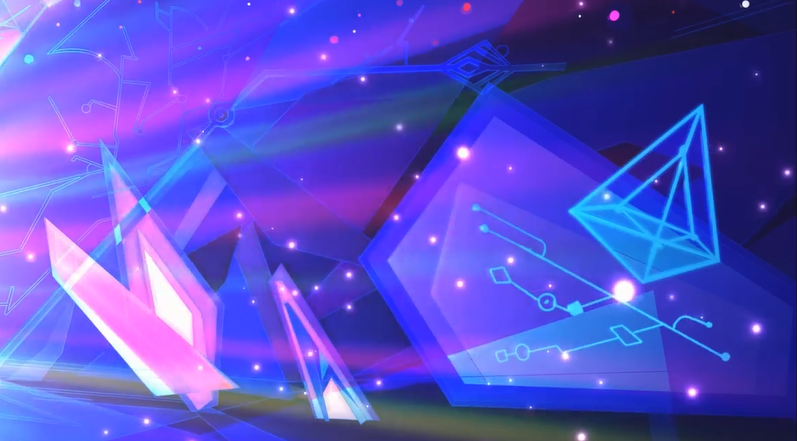
At first glance, this alphabet is full of geometrical shapes, sharp edges, and straight lines, similar to runes, Phoenician alphabet, and other old languages. This link help mystify the first one’s through their language giving the viewer the impression that they are looking at the language of a lost civilization. However, it also differs from the usual old or modern languages, in the fact that the letters aren’t tied in a linear shape, with the world themselves often forming a structure of their own giving room for a writer’s individuality and an outlet for them to express their identity. This gives an air of novelty to the alphabet of the first one’s which is how the viewer ends up looking at writings familiar enough for them to recognize it as the old language of a lost civilization but still unique enough to awaken their curiosity.

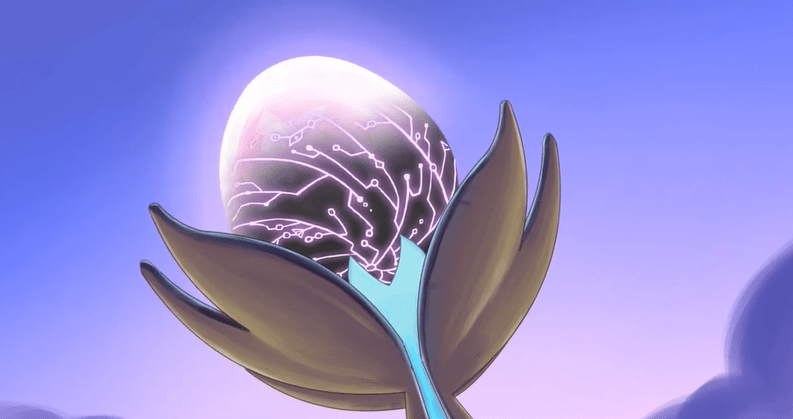
Another interesting thing to note is the way the words are connected. Tied together through lines, they end up spreading the transcript all over the surface that serves as a support to the alphabet. They look similar to a motherboard’s circuit. In the show, it appears that this language’s utility doesn’t lie in its understanding or vocalization, as most of the viewers don’t know how to read the alphabet of the first one, and it’s not spoken or used in the characters daily life, but it lies more in its visual presence.

Its appearance in the show and what it means:

Appearance in The sword Part 1

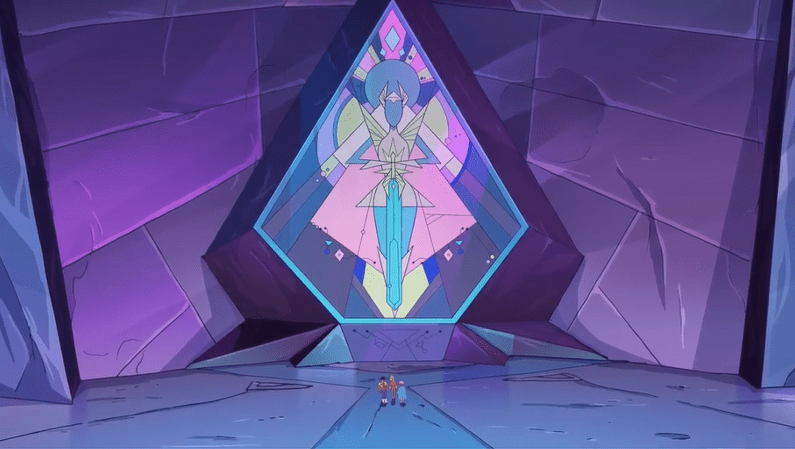
In She-Ra And The Princesses Of Power, the language of The first ones first appears when Adora touches the sword and meets Light Hope in the first episode, The sword part 1, already drawing a connection between the first’s one’s civilization and these symbols the viewer has yet to understand. They will end up showing a lot throughout the series in both the first one’s tech and buildings, emphasizing the constant and looming presence of the first ones in the show. We also see the way they light up whenever any first one’s tech is used, or how they change color when infected. The first one’s alphabet doesn’t limit itself to objects however, it can also be seen on multiple occasions spread overs characters’ bodies, similar to tattoos.

The language of the first ones on Mara in the episode Hero.

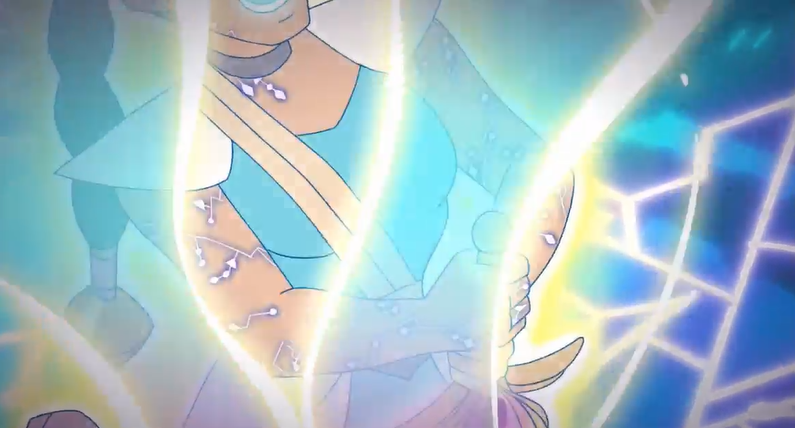
In season 4 episode 9 hero, it appears on a living breathing person, when the viewer learns about the heart of Etheria project, it appears on Mara’s skin when the weapon is activated and for the first time, it appears on She-Ra’s sword. They even appear on the planet itself. This phenomenon happens again in episode destiny 2. The language of the first ones appears on the princesses and their runestones as well as Adora herself. It’s an insight into the way the first one’s language was used during Adoras’ time, as they don’t only look like a motherboard’s circuit as mentioned before, but also act like one, connecting the multiple parts of a bigger machine, siphoning the energy of each and transferring them where they need to be, here being She-Ra’s sword. But they also act as restraints, shackling down Etheria’s magic and everyone else involved in the first one’s machinations. This reinforces the first one’s tie to technology and the artificial, and the way they saw Etheria, the princesses, and most importantly She-Ra as nothing more than a part of their machine with no choice in the matter.

The language of the first one’s on the rune stones.

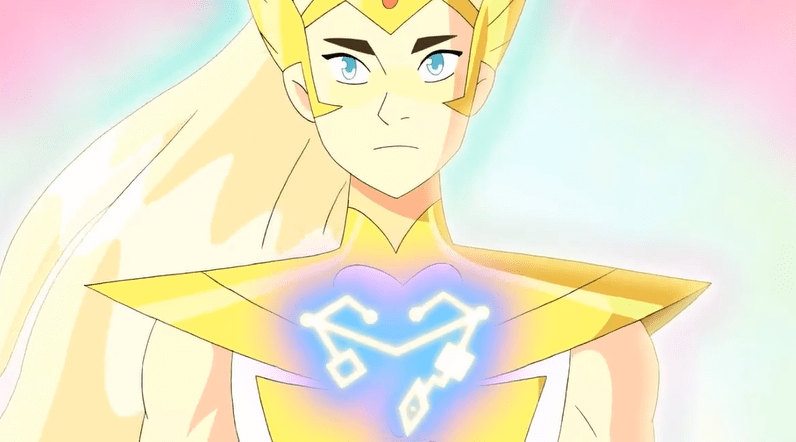
However, Adora does things differently. She breaks the sword, with it the first one’s grip on her and the letters disappear from the rune stones. The next time the sword is shown, is in save the cat When Adora transforms into her new version of She-Ra. The new sword that materialized, doesn’t have any first one’s engraving, and along with all the changes in the new She-Ra, is a testament to Adora’s identity, and to the fact that this She-Ra is the embodiment of the person that she is, free from the first one’s hold. Even though it reappears in season 5 on the planet itself, it doesn’t appear on Adora again until the episode fails safe, where the fail-safe in question materializes as First one’s writing. This time, however, the writing appears different, it’s not impersonal lines engraved on someone’s skin to activate the heart but on the contrary, to deactivate it. It’s engrained in Adora’s soul, as mentioned in the episode failsafe, it’s personal, and it’s the first time in the show where the writing is somehow personalized, forming the same world it translates to, a heart.

The failsafe on She-Ra in episode The heart 2.

The first one’s language in the show doesn’t just help immerse the viewer in the story or connect the narrative dots, but its appearances and evolution is also an outlet for both the story’s progress and the character’s growth, showing how the authentic nature of things triumph over outside influences.

Categories
Entertainment Music

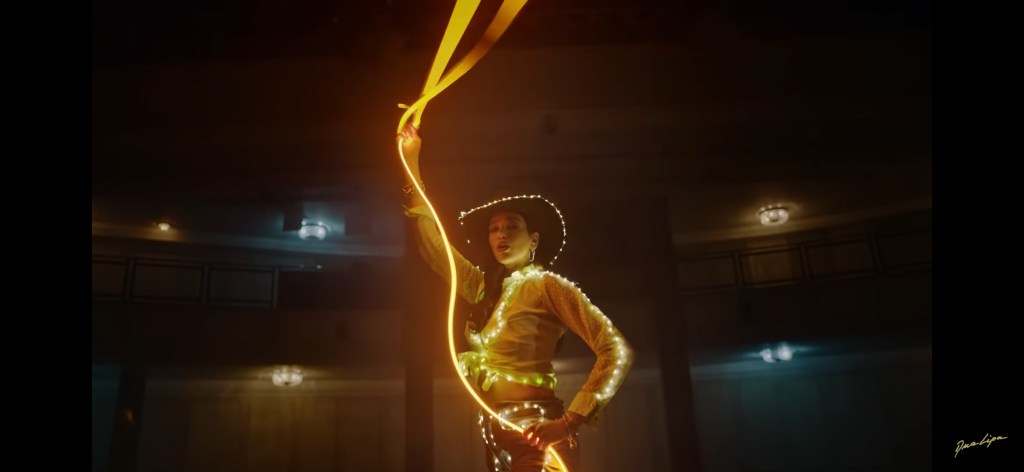
From floating eggs to dancing cowboys, Dua Lipa’s newly released music video of the song “Love again” is full of surprises.

From  “Fever” – done in collaboration with Angèle – to her debut single “rules”, Dua Lipa has yet to disappoint when it comes to the music videos that come with her songs. In her new music video of her song “Love again” from the album “Future Nostalgia”, she illustrates a new, different way of portraying the cowgirl/rodeo theme.

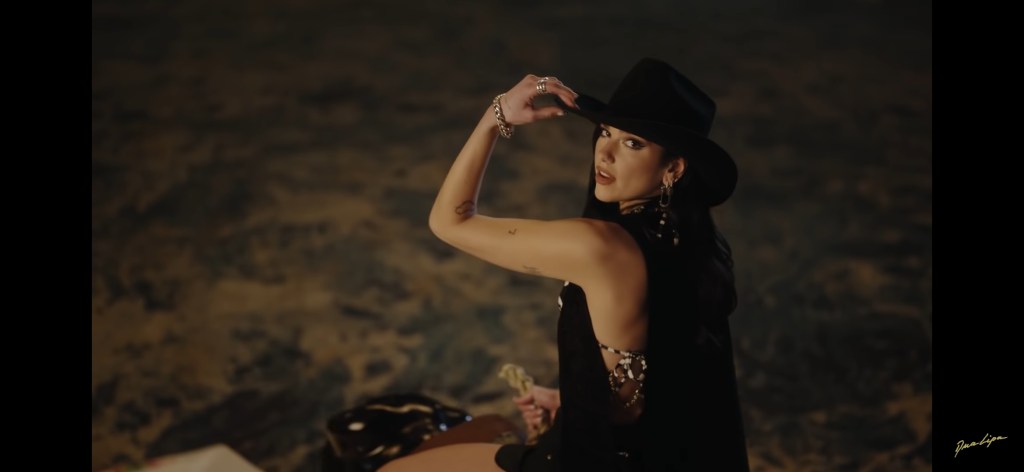
The music video starts with a cowboy hat, levitating around corridors to finally reach a large room where Dua Lipa can be found sitting on an automated bull.

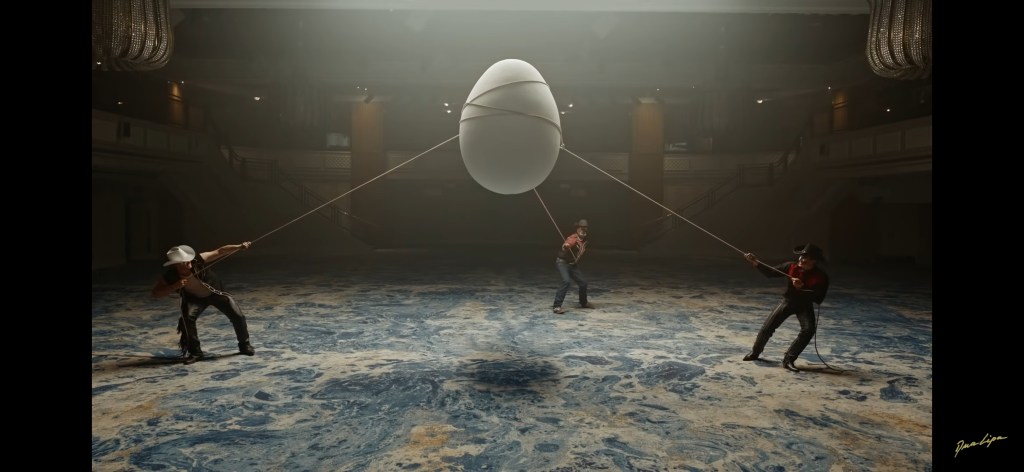
We can then see video sequences of her riding the bull-that is sometimes invisible-, and dancing- surrounded by eggs – with a team of cowboys and cowgirls whose faces are painted like clowns. Three cowboys can also be seen trying to lasso a big, levitating egg.

The music video also emphasizes color with the singer seen mixing paint in a bowl and colorful LED seen put on the electric bull and horses shown in the video as well as Dua Lipa herself.

The sequence of events in this video is confusing, but that’s also what makes its charm. Instead of giving fans a romantic music video as is expected for a song that talks about loving again, Dua Lipa gives the people a video that has nothing to do with romance at first glance. Full of beautiful outfits and intriguing, almost surrealist visuals, this video delivers an interesting follow-up to the song “Love again”.

Only one hour after the release of the music video, it has reached 462,692 views on YouTube and seems to be well received by fans of the singer.

Categories
Art Entertainment Music

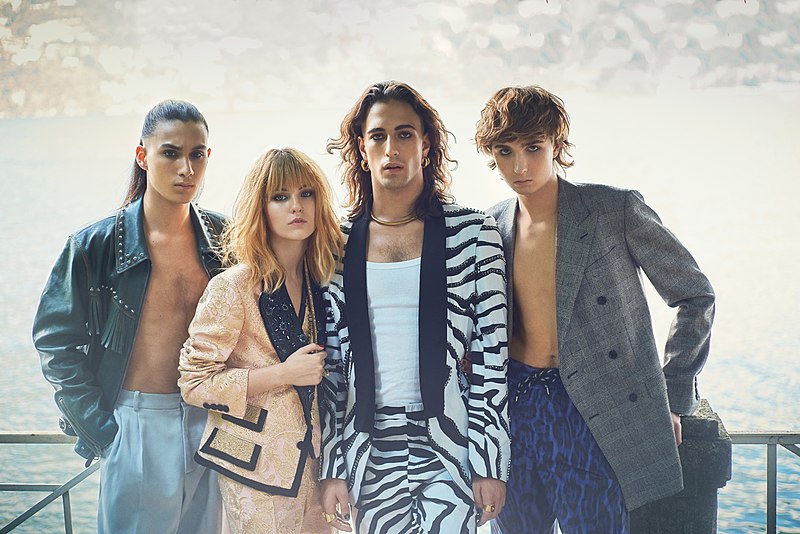
The road to winning Eurovision 2021: Måneskin’s rise to fame.

Every year, all of Europe eagerly hold their breath, waiting to see, which country will take the Eurovision prize home this year. Many see it as an opportunity to put their country on the map or bring their music career to a whole different level. Numerous world-renowned artists found their international fame by winning the famous contest, such as Celine Dion and ABBA, however, winning the Eurovision contest is no easy feat. This was never clearer than with 2021 Eurovision winners, the Italian rock band Måneskin. From their participation in the Italian ex factors to disproven drug allegations, this band’s road to fame is long, arduous, and full of important milestones, despite their young age.

 Lead vocalist Damiano David, bassist Victoria De Angelis, guitarist Thomas Raggi, and drummer Ethan Torchi met in a high school in Monteverde, Rome where they were young students in this same establishment. There they decided to form a band in 2016 and initially used to play in private when they decided to partake in the pulse competition for new bands -that they later won-, which is also when they choose the band’s name. According to the band members, they came up with the name by asking Victoria De Angelis, who is half Danish, to say some Danish words, and so they chose Måneskin, which means moonlight.

This pushed them to start writing their own songs, and eventually lead them to perform in the Felt Music Club & School .
After that, they took their music to the street by becoming buskers and they performed all around the city of Rome. By then they started to participate in more contests and live shows and training hours per day. As they grew older, they amassed more experience, and in 2017, they went on to win second place in the Italian talent show The X Factor where they covered many English songs such as “Somebody Told Me” by The Killers and one original song “Chosen”. This same song was then released as their first single which was included in their first EP by the same name which consisted of songs they covered in the X Factor. It was certified platinum by the Federation of the Italian Music Industry and it jump started their national career.

On 23 March 2018, they released their first Italian single ” Morirò Da Re “, which was then included in their first original album “Il Ballo De La Vita ” (The ball of life) which topped the Italian charts. Additionally to the album, they also released a film documentary called “This is Måneskin” as a way to promote themselves and their album. They released three more songs in 2019: “Fear for Nobody“, ” L’altra dimensione” and “Le parole lontane“, while simultaneously going on their first European tour in Spain, France, Switzerland, Germany, Belgium, and the United Kingdom with more than 140,000 tickets sold. They then released their seventh single “Vent’anni” while working on new material in London.
In March 2021, they won the Sanremo Music Festival 2021 with the song “Zitti e buoni “. After that, they announced their second Album  ” Teatro d’ira ” (Theater of wrath).

On 22 May 2021, they were announced as the winners of the 2021 Eurovision contest while representing Italy, again with the song « Zitti e buoni », winning a total of 524 points – 206 from the jury and 318 from the public. A few moments after their win, however,  online speculations raised the question of whether Damiano, the lead singer of the rock band, was taking drugs, specifically cocaine, after seeing footage of him with his head near a table during the contest. This question was directly asked by a journalist to the singer during the press conference that followed the win. Damiano David – who considered the accusation to be incredibly offensive, and overshadowing their win on the BBC breakfast – formally denied these accusations during the conference and willingly provided a drug test, which turned out negative, as evidence.
This didn’t stop their success, the video of them singing their winning entry in the Eurovision is currently number 1 trending on YouTube, and the song itself has entered the top 20 in many European countries and is now top 9 on the Spotify global chart.
According to the band « this is just the beginning » and they will be going on tour and releasing new music as stated by Vitoria de Angelis in their first reaction to their win.

They are now preparing their next album which is to be released by the end of the year, with at least four concert dates in Italy, a tour in Italy and Europe starting in March 2022 and they have officially released their merchandise today, which were sold in 28 minutes. With all these plans ahead and their blossoming international fame, the world is going to be seeing more of Måneskin soon.   

Design a site like this with WordPress.com
Get started