Categories
Animation Art Entertainment Literature

Arcane’s Jinx and the ancient Greek archetype of the tragic hero.

Storytelling, in its nature, is a group effort. We build stories upon stories, break up old ones and build something new from the pieces left, or get inspired and influenced by complex methods that migrate along different mediums to create something both new and familiarly old. This intertextual dimension has never been more apparent than in the new league of legends inspired show Arcane by Riot Games and Studio Fortiche. While there are many apparent parallels between ancient Greek theater and this show such as its theatrical narrative structure of three Acts, we’ll be focusing on one specific aspect: Jinx, one of the two sisters who this story revolves around. Following the characteristic of a tragic hero using Aristotle’s Poetic among other things, Jinx might just be a modern-day Oedipus, whose only companions seem to be misfortune and irony. But jinx is a new character, born from a creative medium that would have been unimaginable to the ancient Greeks, and as such, the way this literary archetype manifests itself in Arcane is bound to be just as uniquely familiar as jinx herself. In this article, we’ll delve into the characteristics of a tragic hero we can observe in jinx.

Spoiler warning: the following contains spoilers for Arcane season 1.

1. Jinx and the catharsis :

One of the most emblematic aspects of Greek tragedy according to Aristotle, is the concept of catharsis, the purging and manifestation of intense emotions through art, mainly pity and fear. For Arcane’s viewers, Jinx does a great job of doing exactly that. On one aspect, they are clearly meant to pity jinx because of the unfortunate circumstances of her upbringing in an oppressed Zaun, because of the traumatic experiences she went through, the loved ones she lost, and the way she’s suffering as a result of it. But on the other hand, these experiences created a jinx that is highly unstable, chaotic, and powerful but destructive. We can see that Jinx is capable of irreversible harm from the end of act 1 to the last scene that ends with her Hextech rocket headed toward the council’s chamber. Additionally, some part of the viewer doesn’t just fear jinx and her actions but also fear that what happened to Jinx, these experiences, such as the death of a loved one, which are at their core universal human experiences to some extent, might just happen to them someday, that if they were in her place they might have become the same. Ultimately, Jinx throughout her journey shown in Arcane leaves the viewer torn between crushing feelings of pity and fear, which fit exactly what is expected of a Tragic Hero.
2. Right intent, wrong actions:

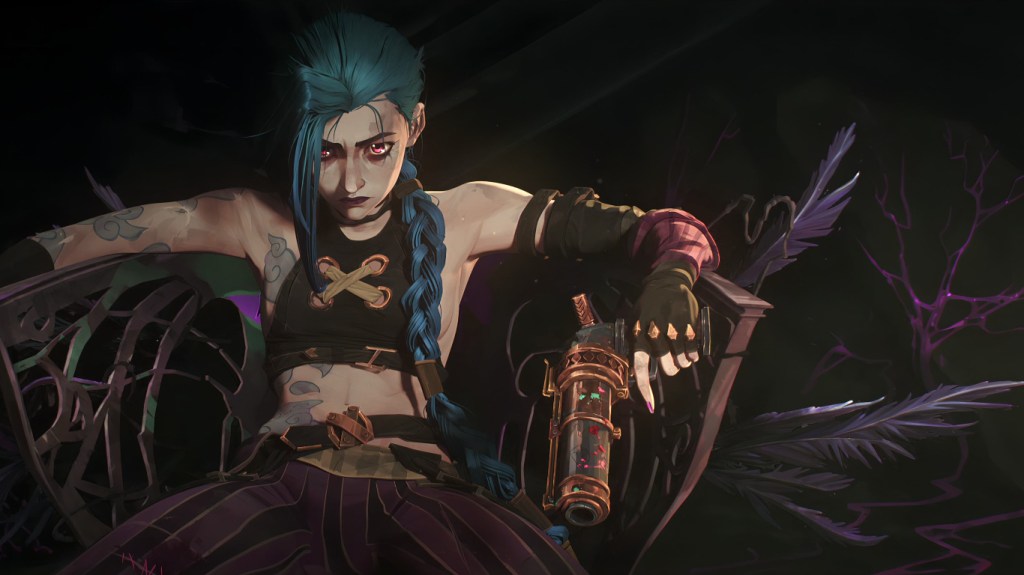
Another important element of a tragic Aristotelian hero is that they are noble individuals with “pure” intent who only did wrong as a result of a human error. As shown in the first Act of the show, Jinx’s only motivation is not power or greed, it’s not revenge, or any typical « evil » goal. what drives her action is her desire to help, to be useful to those she cares about. She went after vi and vender in Act I after realizing that she can use the Hextech crystals to help them. However, because of an honest mistake, she ended up doing something horrible she didn’t intend to do. This pattern constantly repeats itself throughout the show: jinx tries to help Silco by bringing him the Hexcore, killing a dozen enforcers on the way, instinctually tries to protect Vi, and ends up shooting Silico… All of Jinx’s morally questionable actions are a result of poorly executed good intentions.

3. Heroism as an agent of tragedy:

Considering that it’s in the name, a tragic hero to Aristotle is before anything, well, heroic, but in a show of dramatic irony, it’s exactly what leads our characters to their downfall and jinx is no different. Jinx has all the characteristics associated with heroism: she has relatively good intentions as mentioned previously, she’s distinctively smart and innovative to the point where even victor praises her work, and she tries in her own way to right the wrongs of her word embodied by the oppression of Zaun.  But again, it’s these heroic characteristics that drive her to sabotage herself and even have the capacity to go through the actions that cause her pain and suffering: if jinx wasn’t smart enough to figure out how to build her own Hextec weapon in Act III, didn’t wish to honor Silico one last time and « show them all » the worth of Zaun who they wronged, things would have ended very differently.
4. The irony of fate:

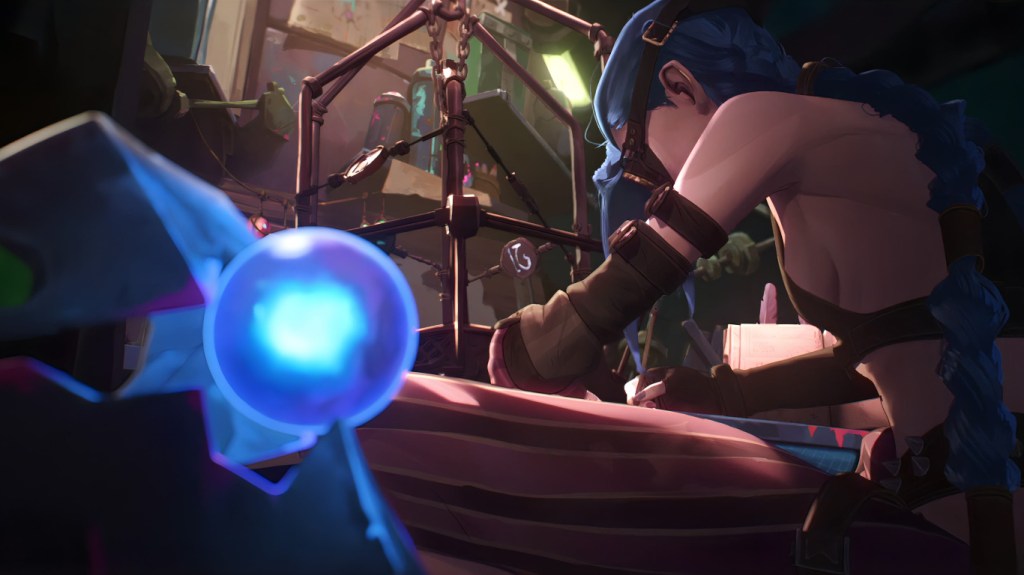
One of the most marking characteristics of Greek tragedy as a whole, is the presence of an inescapable fate, a destiny dictated by distant gods. The tragic irony of these plays lies in a hero, whose efforts to escape their predestined and prophesied fate, end up fulfilling it like Oedipus who came face to face with his fate while running away from his adoptive kingdom in an effort to escape it. While we wouldn’t exactly talk about fate in a traditional sense when talking about arcane, as five by five takes puts it in their Youtube video concerning Arcane, the determinist nature of Arcane’s universe is born from power structures and institutions that were here way before any of the characters but also acknowledge the decisions of the characters themselves. For jinx, her « predetermined » role as The Jinx, was already established in her youth by Milo, almost like a prophecy, and since then jinx tried to do everything in her power to disprove that, to show that she can help those around her and that not every project she’s a part off go south. But it’s exactly that eagerness to prove herself useful, to discard her role of jinx, that ends up fulfilling it. It is also interesting to mention that considering that Arcane follows the game of leagues of legends to some extent, powder becoming jinx was also something already predetermined in that aspect by the lore.

Overall, jinx is a complex character whose heritage seems to belong to the depth of the literary world but is also the labor of love and innovation of the Arcane writers who were able to breathe a new life into old and overused concepts in a way that serves modern media and create a fascinating character you can’t help but want to know more about in the next season of the show. 
 

Categories
Cartoon Entertainment

The use of the Language of the First Ones in “She-Ra And The Princesses Of Power”.

“She-Ra And The Princesses Of Power” is the kind of show that stays with the viewer, one that they come back to, and one that they can watch a million times and still notice new things every time. From the great representation to the interesting storyline, it’s clear that Noelle Stevenson and the crew behind the making of the reboot had put a lot of care and work into every detail that make up the show. There are many aspects worth talking about, such as world-building, character development, and more. This article focus on the language of the first one used throughout  « She-Ra and the princesses of power » as this often-overlooked element plays a bigger role in the show than one would think.

With the lack of information given by the studio about the language of the first ones, a general analysis of the show is important in this case, so beware of spoilers.

A month before the release of the show on Netflix, The official Twitter account released a guide on how to read the first ones’ language, likely as a marketing scheme, and it’s the only piece of information given about the language of the first ones’. According to the official guide, The language in question uses a phonetic alphabet that associates shapes with sounds and that it roughly translates to English. So whether it’s a new language or just a different alphabet to write English in, is up for debate. As such, the focus will be put on the alphabet itself.

The Alphabet of the first one and what can be taken from it:

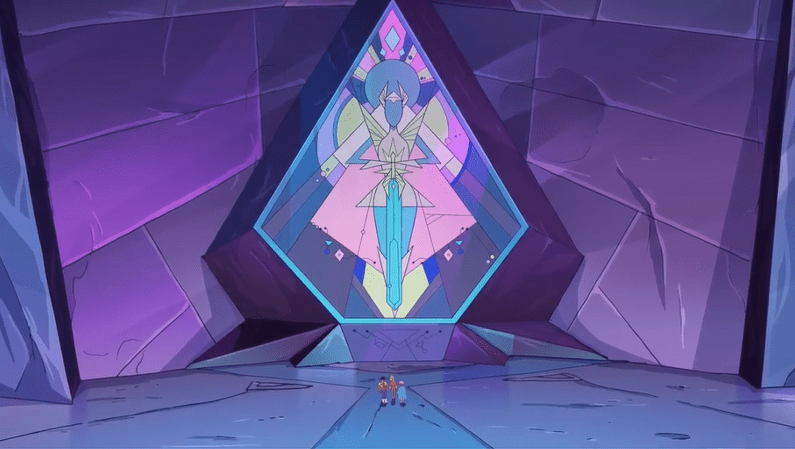
At first glance, this alphabet is full of geometrical shapes, sharp edges, and straight lines, similar to runes, Phoenician alphabet, and other old languages. This link help mystify the first one’s through their language giving the viewer the impression that they are looking at the language of a lost civilization. However, it also differs from the usual old or modern languages, in the fact that the letters aren’t tied in a linear shape, with the world themselves often forming a structure of their own giving room for a writer’s individuality and an outlet for them to express their identity. This gives an air of novelty to the alphabet of the first one’s which is how the viewer ends up looking at writings familiar enough for them to recognize it as the old language of a lost civilization but still unique enough to awaken their curiosity.

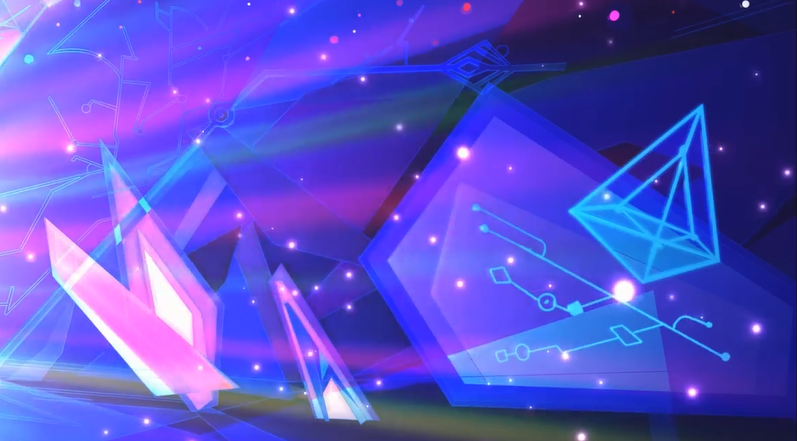
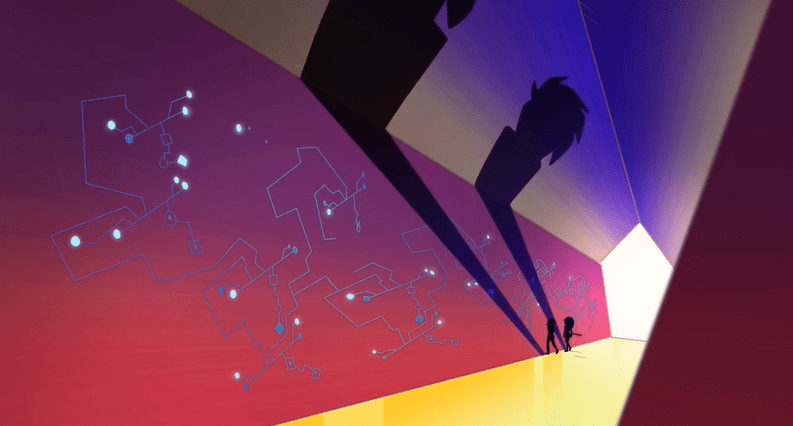
Another interesting thing to note is the way the words are connected. Tied together through lines, they end up spreading the transcript all over the surface that serves as a support to the alphabet. They look similar to a motherboard’s circuit. In the show, it appears that this language’s utility doesn’t lie in its understanding or vocalization, as most of the viewers don’t know how to read the alphabet of the first one, and it’s not spoken or used in the characters daily life, but it lies more in its visual presence.

Its appearance in the show and what it means:

Appearance in The sword Part 1

In She-Ra And The Princesses Of Power, the language of The first ones first appears when Adora touches the sword and meets Light Hope in the first episode, The sword part 1, already drawing a connection between the first’s one’s civilization and these symbols the viewer has yet to understand. They will end up showing a lot throughout the series in both the first one’s tech and buildings, emphasizing the constant and looming presence of the first ones in the show. We also see the way they light up whenever any first one’s tech is used, or how they change color when infected. The first one’s alphabet doesn’t limit itself to objects however, it can also be seen on multiple occasions spread overs characters’ bodies, similar to tattoos.

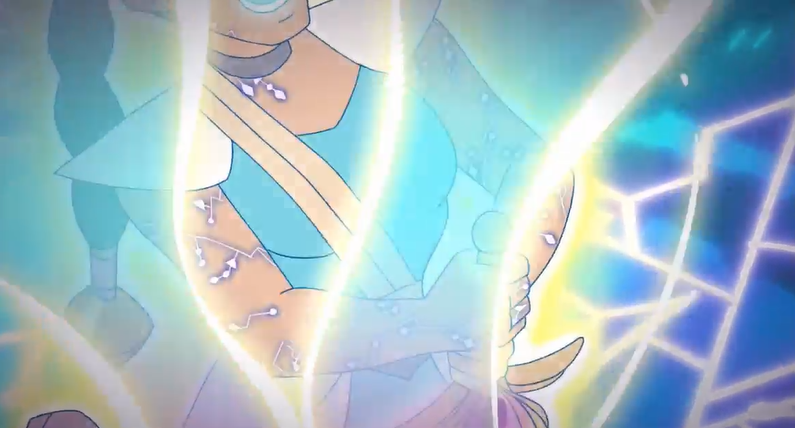
The language of the first ones on Mara in the episode Hero.

In season 4 episode 9 hero, it appears on a living breathing person, when the viewer learns about the heart of Etheria project, it appears on Mara’s skin when the weapon is activated and for the first time, it appears on She-Ra’s sword. They even appear on the planet itself. This phenomenon happens again in episode destiny 2. The language of the first ones appears on the princesses and their runestones as well as Adora herself. It’s an insight into the way the first one’s language was used during Adoras’ time, as they don’t only look like a motherboard’s circuit as mentioned before, but also act like one, connecting the multiple parts of a bigger machine, siphoning the energy of each and transferring them where they need to be, here being She-Ra’s sword. But they also act as restraints, shackling down Etheria’s magic and everyone else involved in the first one’s machinations. This reinforces the first one’s tie to technology and the artificial, and the way they saw Etheria, the princesses, and most importantly She-Ra as nothing more than a part of their machine with no choice in the matter.

The language of the first one’s on the rune stones.

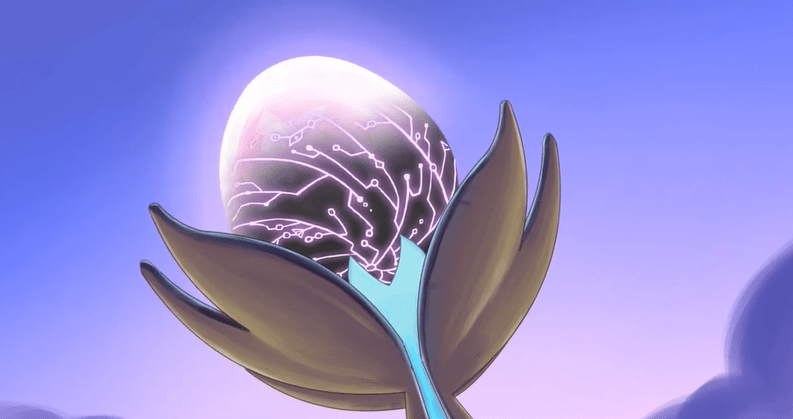
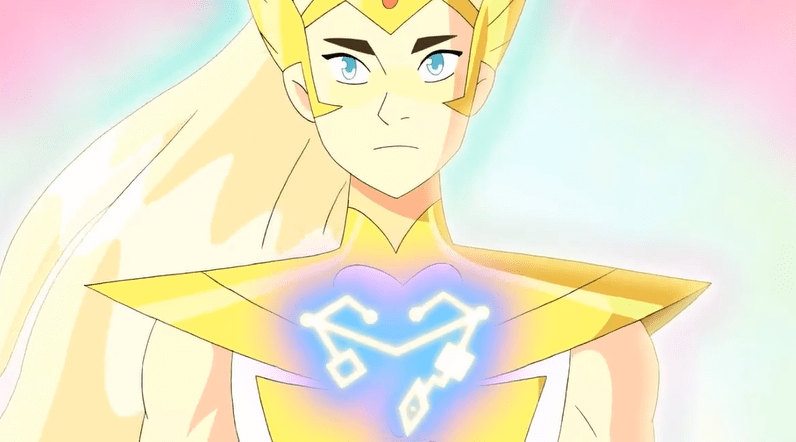
However, Adora does things differently. She breaks the sword, with it the first one’s grip on her and the letters disappear from the rune stones. The next time the sword is shown, is in save the cat When Adora transforms into her new version of She-Ra. The new sword that materialized, doesn’t have any first one’s engraving, and along with all the changes in the new She-Ra, is a testament to Adora’s identity, and to the fact that this She-Ra is the embodiment of the person that she is, free from the first one’s hold. Even though it reappears in season 5 on the planet itself, it doesn’t appear on Adora again until the episode fails safe, where the fail-safe in question materializes as First one’s writing. This time, however, the writing appears different, it’s not impersonal lines engraved on someone’s skin to activate the heart but on the contrary, to deactivate it. It’s engrained in Adora’s soul, as mentioned in the episode failsafe, it’s personal, and it’s the first time in the show where the writing is somehow personalized, forming the same world it translates to, a heart.

The failsafe on She-Ra in episode The heart 2.

The first one’s language in the show doesn’t just help immerse the viewer in the story or connect the narrative dots, but its appearances and evolution is also an outlet for both the story’s progress and the character’s growth, showing how the authentic nature of things triumph over outside influences.

Design a site like this with WordPress.com
Get started