
In the late 90s, if someone went to the cinema to watch a Horror movie, chances are they’d see a Slasher on the big screen, like Scream. In the late 2000s and early 2010s, chances are they’ll find themselves face-to-face with a possession Horror film like The Conjuring or Annabel. Not to say that Horror movies can be contained in one straightforward archetype per decade, or that these archetypes didn’t exist in different times. However, we can’t ignore that each cinematic era was defined by the popularity of specific tropes and narratives. This brings forth the question: what about our late 2010s and early 2020s era? What archetype emerged at the forefront of our contemporary Horror scene? According to Scream 5, a movie franchise that prides itself in its metatextuality, two trends emerge when it comes to current horror movies: the revival of classic Movies, and what is referred to as “elevated” Horror.
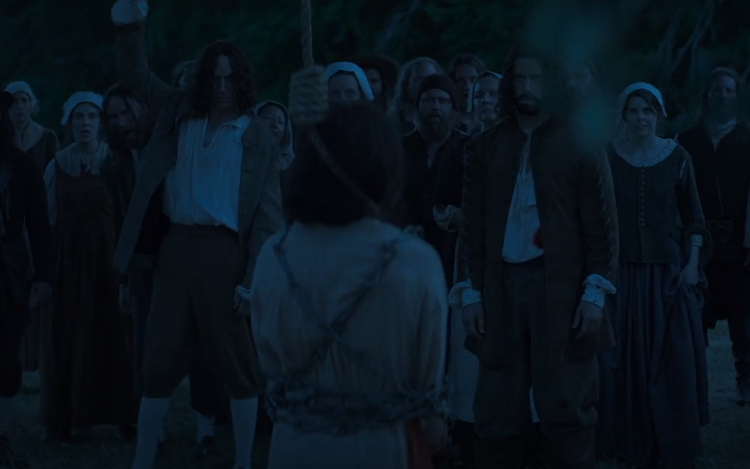
Indeed, many classics like Halloween and The Candy Man were remade for the big screen, so the Scream writers were definitely on to something. This desire for the revival of the old classics even goes beyond remakes and into the realm of original films. Even when producing new franchises, many of them attempt to appeal to the viewer’s nostalgia and pay homage to all the different styles and genres of Horror. The biggest example of that is in the Netflix Fear Street trilogy based on R. L. Stine’s book series of the same name. In each film, the viewer gets to experience different filming and narrative styles related to a specific era of Horror cinema. In the first film, Fear Street Part One: 1994, we revisit the Scream type of slasher, in Part Two: 1978, summer camp slashers are put into the spotlight, and finally Part Three: 1666 goes back in time and delves into the American gothic/puritan horror. During this trip back in time, the writers also attempt to add a social commentary about Homophobia, sexism, and social inequality, among other things, in the background. This is an example of how the revival of the classics overlaps with the second Horror trend mentioned in Scream 5: “Elevated” Horror.
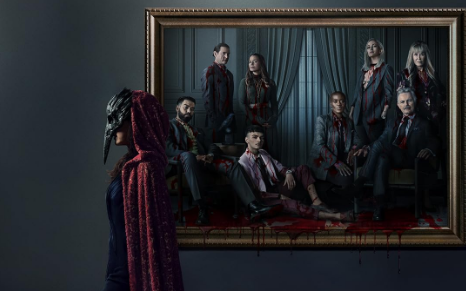
While I find the term “elevated” problematic, it’s used to refer to art-house horror and social thrillers that attempt to tackle social and existentialist issues through Horror elements. Many Horror and Thriller movies produced in the past few years fit this characterization. From Get Out to Hereditary, many original movies were made to either directly, or metaphorically, represent social, psychological, and existentialist issues such as racism, generational trauma, and grief. In fact, many remakes of classical Horror movies aimed to add that social dimension to classic stories. This also extends to the adaptations – and sometimes remakes – of classic books, with The haunting anthology made by Mike Flanagan as one of the biggest examples. The famous Horror producer is even preparing an adaptation of Edgar Allan Poe’s groundbreaking short story The Fall of the House of Usher. Reusing classical Gothic stories and their different cinematic adaptations in current horror trends comes as no surprise. After all, the Gothic movement is probably the oldest predecessor of the Horror genre considering it was one of the first literary movements that had the explicit purpose of, well, horrifying its reader. It’s only natural to re-focus on the gothic in what we spent the last few paragraphs describing as a cinematic era defined by a return to the classics. However, the grip of the past in contemporary cinematic trends goes even deeper than one might have first realized.
While the Gothic genre – or any literary genre really- is one in constant evolution and expansion, it has always been about more than just fear. To many scholars, such as Maurice Levy, the gothic story was also defined by the pursuit of personal and generational quests. These quests often tackled generational conflicts and Madness like in The Castle of Otranto, the first gothic novel. They involved people being haunted by grief and trauma that showed itself through supernatural occurrences like in The Entail by E.T.A Hoffman. Sounds familiar? Even in terms of the much younger American gothic, classic stories like Hawthorne’s The House of the Seven Gables have always used the horrifying to tackle Puritanism and the sins of the American past. All themes we see again in The Witch, one of the movies that ushered in the era of “Elevated” Horror according to an article in Vanity Fair. And here lies the problem with the use of the term “Elevated” Horror. You can’t consider horror with meaningful narratives an elevated version of the genre when the genre was always more than just spooks. The term did however help to bring this dimension of Horror back to the forefront of viewer’s minds, as the previously mentioned article point out. While the symbolic and meaningful dimension of Horror was always here, we can’t deny that it was dismissed and forgotten for a long time. This current desire to bring back attention to it and to use Horror to reflect various issues is, in itself, a revival. The revival of an older definition of scary stories. And so we see in contemporary horror the return of classical stories, but also the return of a long-lost definition of the genre. However, even this desire to go back to the past is, paradoxically, a desire of the past.
Another important feature of the Gothic that went beyond the literary movement and into the world of cinema is an accent on the past. It’s no coincidence that the stories always took place in old, often medieval buildings. Or that the story itself is one that started in a time of old. The denomination of “Gothic” in and itself is one used to talk about medieval architecture and then the literary movement by association. This return to gone-by history played major roles in many gothic tales. In The Castle of Otranto, for example, the author, Horace Walpole, mentions in the first preface that the superstitious beliefs exhibited in the story are justified by the time when it happened. A medieval time with strange beliefs and notions. However, that return to the past and its traditions – no matter what era that past existed in – is also the expression of something else entirely. In early Gothic stories, the architectural structure, often the literal materialization of the past, ends up in ruins as part of the resolution. With that being said, we were often left with the hope of something being rebuilt from it. A better version of the castle like in The Castle of Otranto, a lighthouse to guide sailors like in The Entail… We go back to the past, appreciate what it can give us, and build something new from it. Something that belongs in a new era.
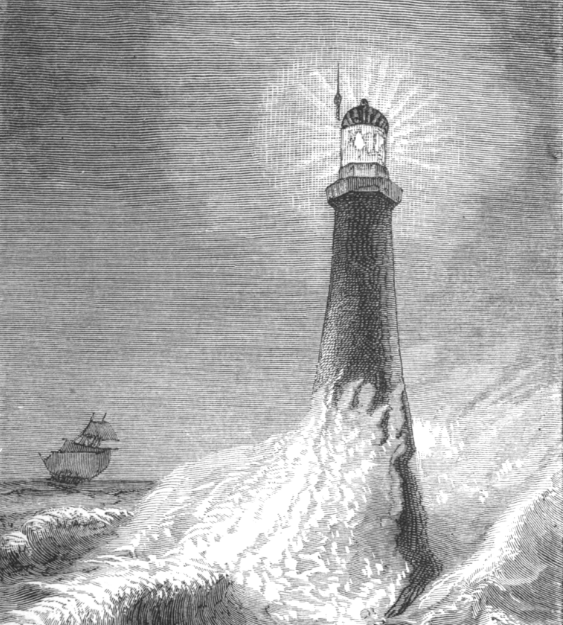
All the storytellers that came before left something for those that came after them to use in ways they couldn’t even have imagined. The storytellers and cinematographers of previous times didn’t have the cinematographic techniques we have in our contemporary era, the understanding we have of certain social issues, and the representation of various social groups we have now. They didn’t have certain creative geniuses we have now, the Horizon of expectations we have now. As such it would not only be unfair, but also wrong, to classify today’s Horror as simple copies and remakes. The movies mentioned previously as “Elevated” might take inspiration from the past but like those in that same past, they use it to make something new, to rebuild their own lighthouse that will guide the way to the future…

 golden cult
3 replies on “Looking for the Future in the Past: How Horror revival brings forth a new age for the genre.”
[…] other popular genres suffered. During the COVID pandemic, for instance, the horror genre brought a new evolution in how we consume […]
LikeLike
hey I randomly found your blog while looking for the French translation of Achilles Come Down, Albert Camus parts. Please never stop with this. Also I would really like to get in touch with you. If possible could you text me at noondips on Instagram. Love your work. Love how your brain works ❤
LikeLiked by 1 person
Thank you so much for your encouragement! I’m so happy you’ve found something you loved on that blog of mine. It has been a while since I last posted an article, but your kind words just motivated me to get back to it. As such, I would be more than happy to get in touch with you 🙂
LikeLike